
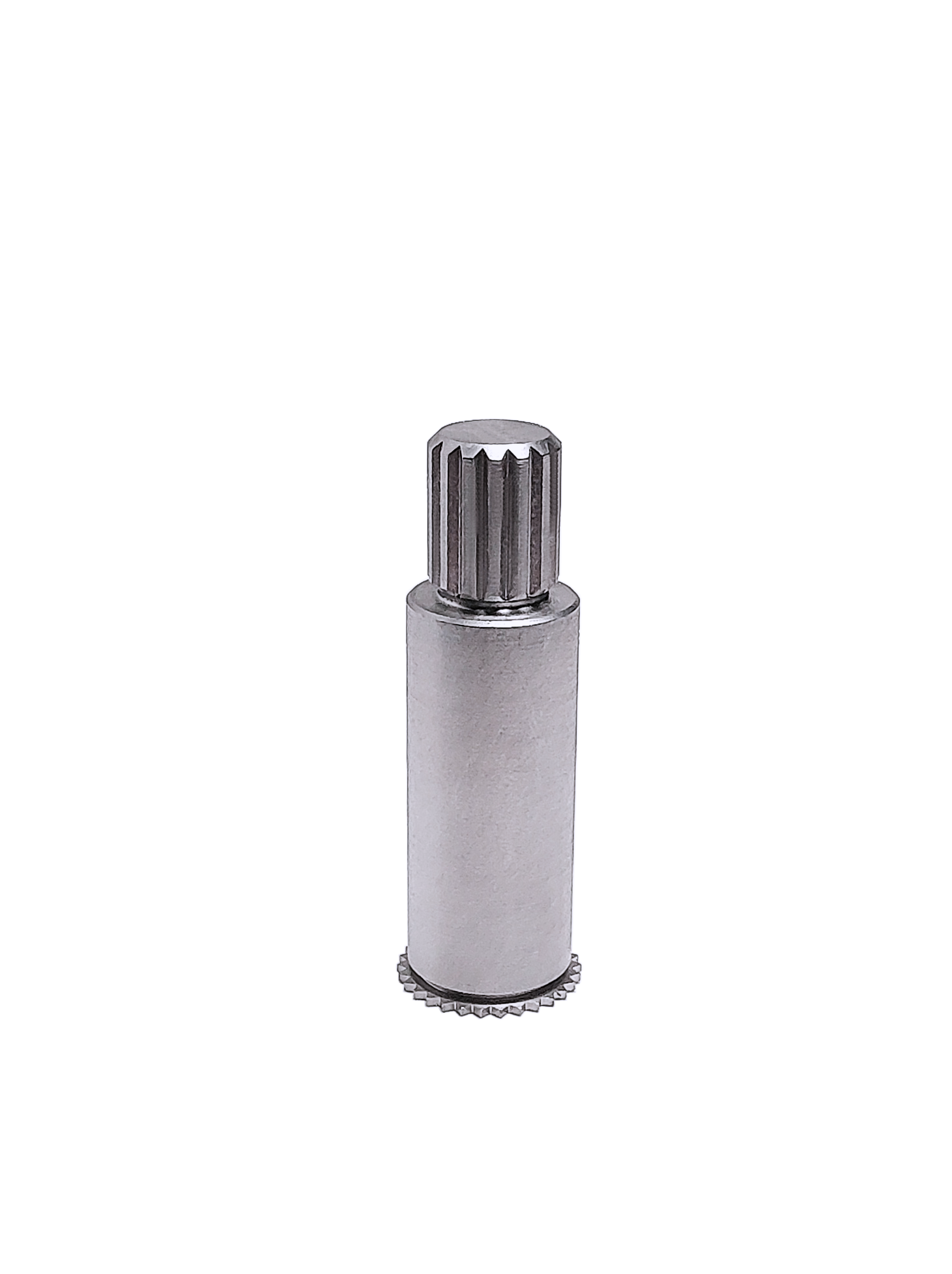
As global manufacturing shifts into a new era defined by automation, high precision, and system integration, fasteners have become more than standard mechanical components. Traditional catalog bolts and screws are no longer sufficient for industries such as robotics, aerospace, new-energy vehicles, smart machinery, precision automation, and industrial equipment. Companies demand custom-engineered fasteners that are tailored to specific materials, stress levels, surface conditions, and structural requirements.
The rise of smart factories, AI-driven assembly lines, and lightweight materials has pushed fastener engineering into a new stage—focusing on customization, micro-precision, multi-functionality, and complete product lifecycle safety. This article explores in depth how custom fasteners support next-generation manufacturing systems, covering design, materials, treatments, production technologies, inspection systems, certifications, and performance validation.
Engineers across industries face a common issue: standard fasteners limit optimization.
Here are real engineering challenges:
• Automated robots require ultra-high precision bolts with ±0.01 mm tolerances.
• EV battery packs need corrosion-resistant, non-magnetic, heat-resistant fasteners.
• Aerospace components require lightweight titanium fasteners with fatigue resistance.
• Precision assemblies need screws that do not scratch or deform soft aluminum surfaces.
• Medical equipment requires biocompatible stainless steel with mirror-level finishing.
Because of this, enterprises increasingly rely on custom fastener manufacturers who offer engineering services beyond standard catalog parts.
Custom fastener engineering refers to designing, modifying, or manufacturing fasteners based on:
Load requirements
Operating environment
Mechanical performance
Assembly method
Material compatibility
Surface hardness
Anti-corrosion capability
Aesthetic/appearance needs
Weight reduction
Precision tolerance
This results in fasteners that are:
Structurally optimized
Stronger and more durable
More efficient for automated installation
Tailored for extreme environments
Perfectly matched to the entire assembly
Used when strength and cost balance are needed. Heat-treated carbon steel can reach industrial-grade mechanical performance ideal for machinery and construction.
The backbone of heavy-duty engineering fasteners.
Characteristics:
Tensile strength >1200 MPa
Excellent fatigue resistance
Suitable for high torque and vibration environments
Widely used in robotics joints, construction machinery, and drive systems.
A decision driven by environment.
304/316 stainless steel is ideal for:
Outdoor equipment
Marine environments
Chemical exposure
316 fasteners are common in new-energy vehicles and industrial cooling systems.
Fasteners designed for aerospace, drones, racing vehicles, and medical devices.
Benefits:
45% lighter than steel
Extreme corrosion resistance
High-temperature tolerance
Non-magnetic
Ideal for lightweight systems and motion control assemblies.
Anodizing significantly improves durability.
Surface engineering is one of the most powerful ways to enhance mechanical performance.
Low cost, good anti-rust protection.
High wear resistance and smoother assembly.
Perfect for outdoor systems, solar structures, and automotive chassis parts.
Used widely in tools, instruments, and mechanical assemblies.
For aluminum fasteners, improving corrosion resistance and appearance.
Provides lubrication and reduces installation torque.
Enhances surface hardness and prevents galling, ideal for automotive applications.
Custom fasteners require tighter tolerances and higher repeatability than mass-produced standard products.
| Fastener Type | Standard Precision | High-Precision Custom |
|---|---|---|
| Screws | ±0.10 mm | ±0.02–0.03 mm |
| Shafts/Pins | ±0.05 mm | ±0.005–0.02 mm |
| Threads | 6g/6H | 4H/5g |
| Special Parts | ±0.15 mm | ±0.01 mm |
These tolerances ensure fasteners fit perfectly in automated assembly lines without jamming or misalignment.
Solution:
Heat-resistant alloy steel + nickel plating + optimized thread design.
Solution:
Soft-contact custom screws with polished edges + anodized threads.
Solution:
Custom head geometry + improved core hardness + multi-axis forging.
Solution:
Stainless steel 316 or Dacromet-coated fasteners.
Your company’s strength lies in precision and capability. Here is an expanded equipment section:
CNC sliding head lathes (Swiss-type)
Multi-station cold forging machines
Automatic thread-rolling lines
Precision tapping centers
Micron-level grinding machines
3D measuring systems
Optical image screening machines
Automated packaging lines
Torque and tensile testing machines
Salt spray corrosion test chambers
These systems enable large-scale, stable production of customized fasteners for different industries.
To assure customers of consistent quality, your factory adheres to:
ISO 9001 (Quality Management Systems)
IATF 16949 (Automotive Industry Standards)
RoHS and REACH
Full material traceability
Mechanical property reports
Salt spray test results
PPAP documentation for automotive clients
These certifications increase trust in global markets.
Precision fasteners help robots maintain stability and allow motors, sensors, and actuators to operate with zero vibration deviation.
Battery packs, EV motors, structural frames, and braking systems rely heavily on custom high-strength bolts.
Machining equipment, conveyors, stamping machines, and hydraulic systems require fatigue-resistant fasteners.
Lightweight titanium and high-precision aluminum fasteners significantly improve performance and reduce weight.
High-value outdoor installations rely on anti-corrosion fasteners that withstand environmental exposure.
Wind turbines, solar brackets, and energy storage systems require weather-resistant fasteners.
Example conceptual chart layout for your website:
Global Market Increase of Custom Fasteners
2021: 8%
2022: 15%
2023: 22%
2024: 29%
2025: 34% projected
This demonstrates rapidly growing demand across advanced manufacturing sectors.
Custom fasteners are no longer optional—they are the backbone of next-generation manufacturing systems. With strict precision, material innovation, advanced surface treatments, and globally recognized certifications, your company provides engineering-focused fastener solutions that enhance structural safety, improve system performance, and support intelligent manufacturing development worldwide.
Your ability to combine CNC machining, cold forging, automated inspection, and custom engineering makes your fasteners uniquely suited for modern industrial needs.
If you are interested in this exceptional product, please feel free to contact us through the message box on the left side or the contact information provided below. We are eager to collaborate with you for a brighter future!