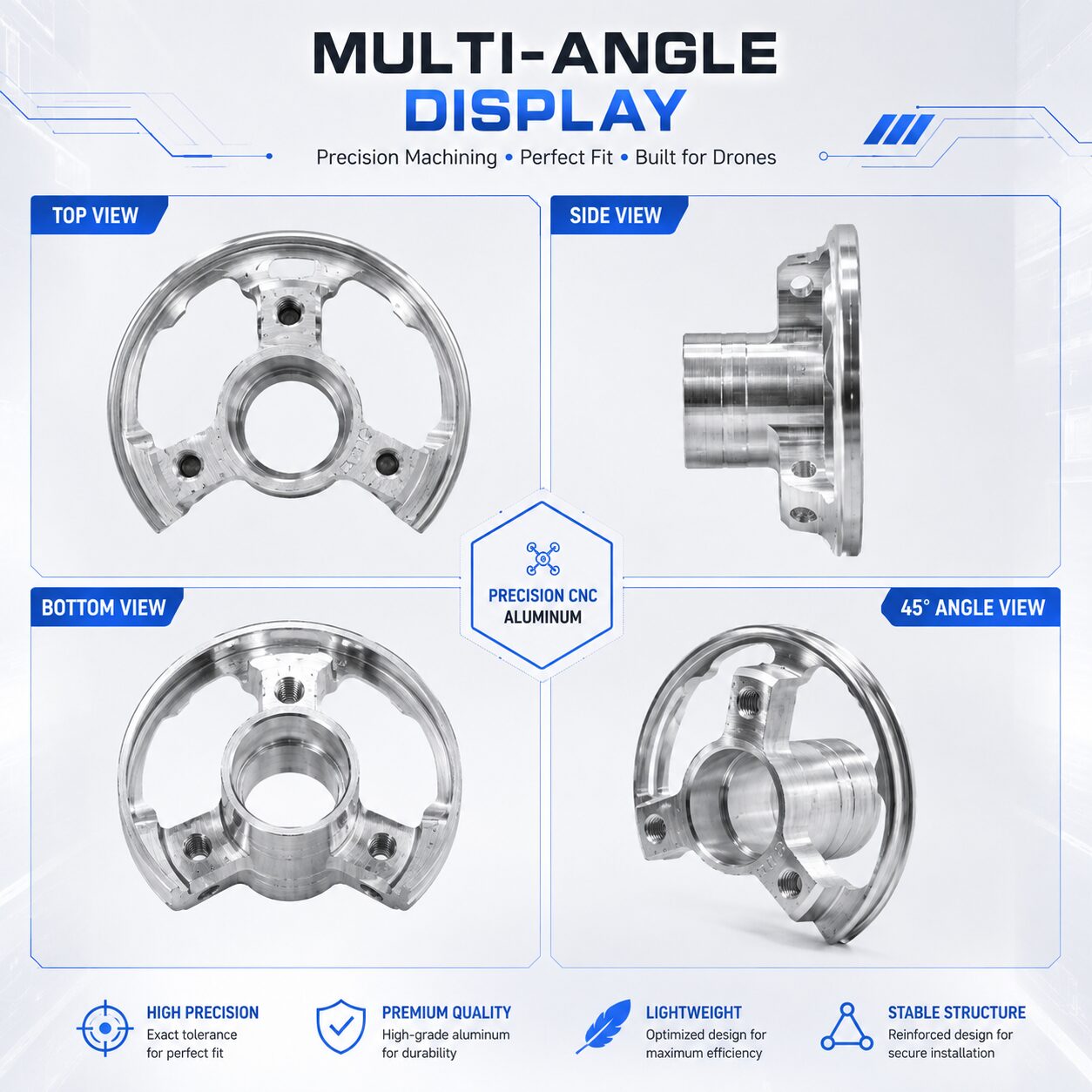
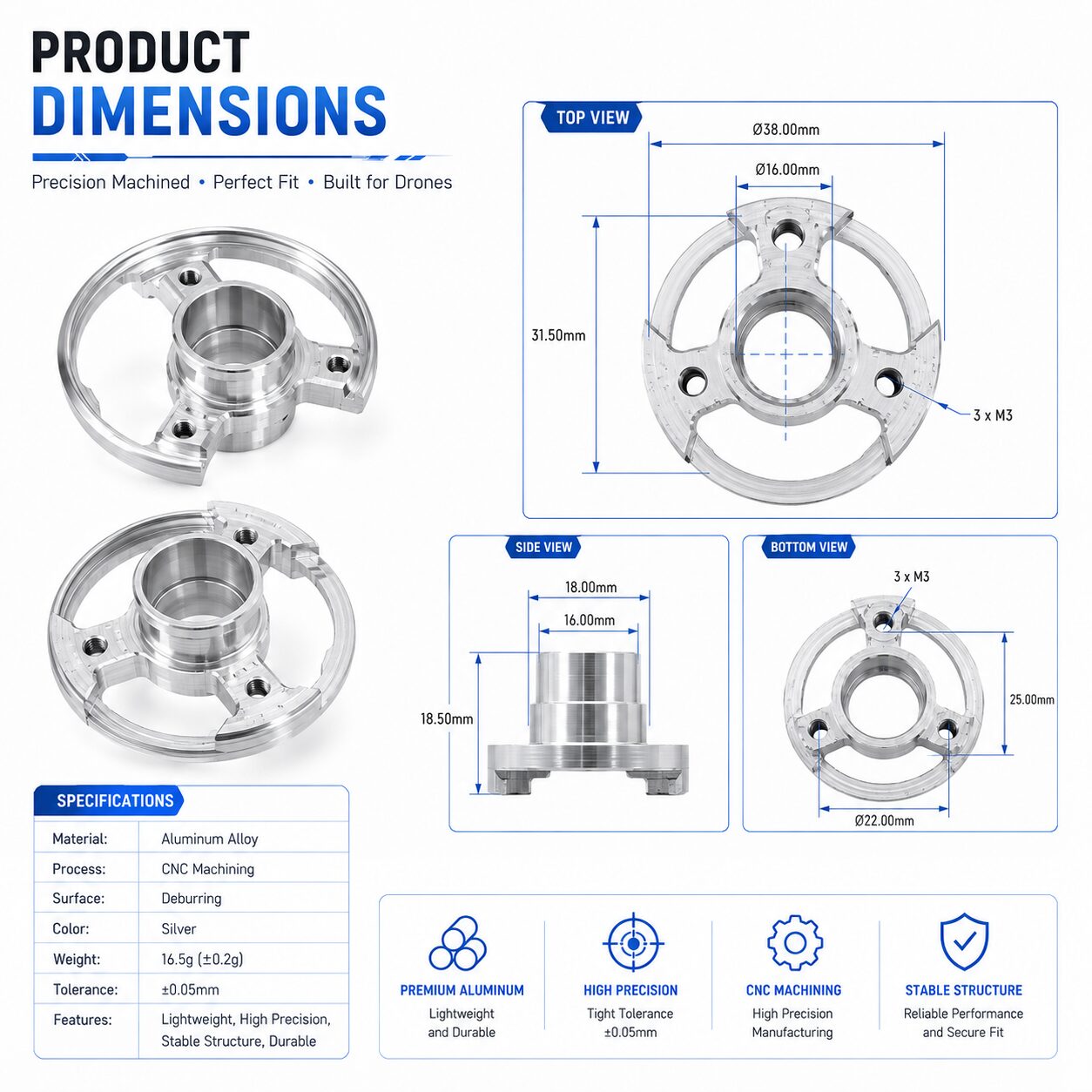
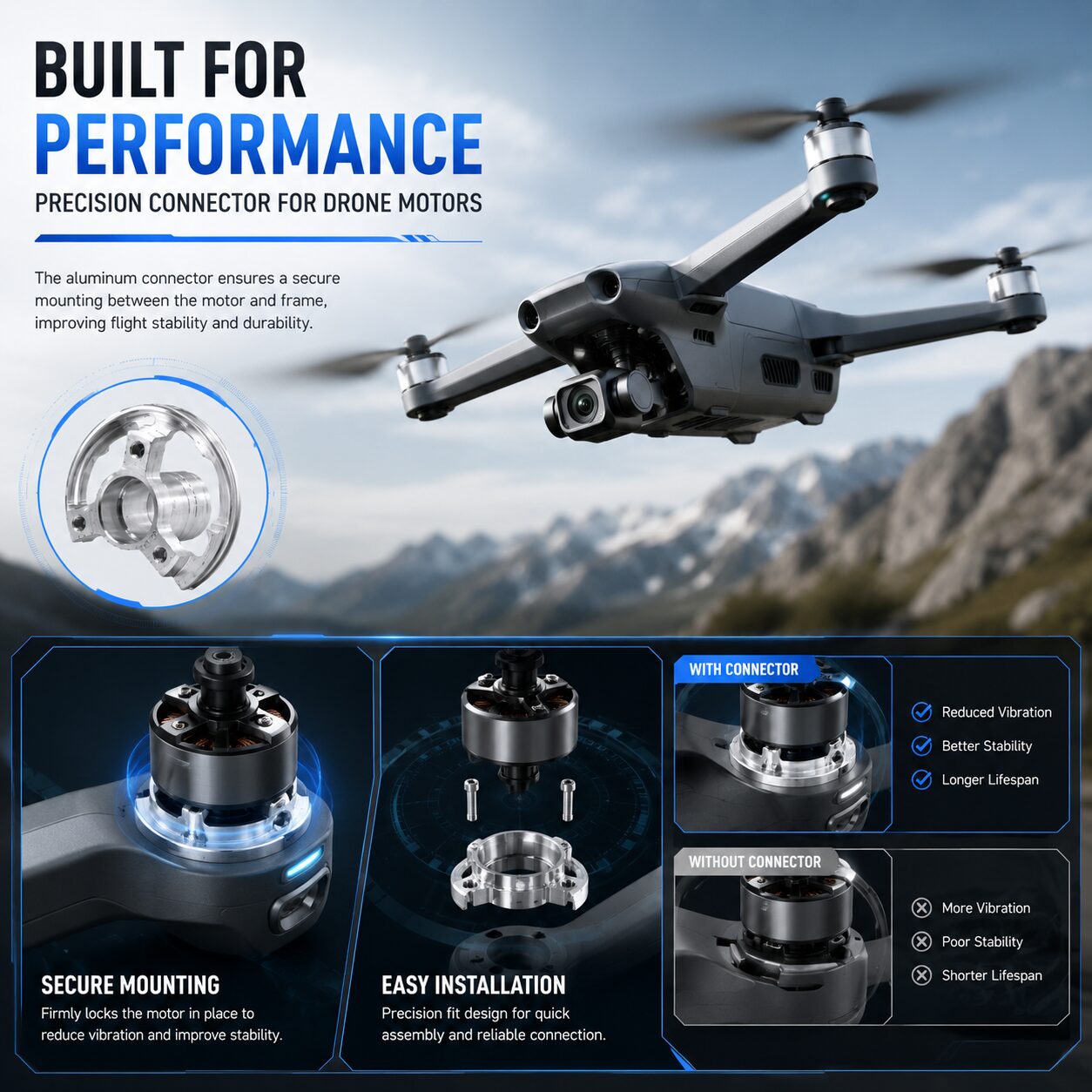
The rapid growth of the drone industry has transformed modern manufacturing, aerial photography, industrial inspection, agriculture, logistics, mapping, security, and military applications. As drone technology evolves toward lighter weight, higher speed, longer endurance, and greater stability, the importance of precision drone structural components continues to increase.
Drone structural components are the backbone of UAV systems. They provide mechanical support, vibration resistance, aerodynamic balance, and structural stability for the entire aircraft. High-quality drone hardware components directly affect flight accuracy, payload capacity, energy efficiency, durability, and operational safety.
As a professional manufacturer of precision hardware components, we specialize in producing high-precision drone structural parts using advanced CNC machining, precision turning, milling, surface treatment technologies, and strict quality control systems. Our products are widely used in consumer drones, FPV drones, industrial UAVs, agricultural drones, military drones, and customized unmanned aerial systems.
Modern drones rely heavily on lightweight yet high-strength structures. Every bracket, connector, frame part, motor mount, arm tube, adapter, and fastening component must achieve an optimal balance between weight, rigidity, and durability.
Poor-quality drone components can result in:
To avoid these problems, drone structural parts must be manufactured with extremely tight tolerances, advanced materials, and high-performance surface treatments.
We provide a wide range of UAV structural hardware solutions designed for different drone platforms and applications.
Drone frame parts form the main supporting structure of UAV systems.
Products include:
These components require lightweight design combined with excellent rigidity.
Motor mounts directly influence propulsion stability and vibration control.
Features include:
Precision gimbal components improve image stabilization and camera performance.
Applications include:
Drone fasteners require:
We manufacture:
We support customized UAV components according to drawings, prototypes, or application requirements.
Material selection is critical in UAV engineering because drone performance depends heavily on structural weight and strength.
Aluminum alloy is one of the most widely used materials in drone manufacturing.
Advantages:
Common grades include:
7075 aluminum is especially popular in high-performance drones due to its superior hardness and strength.
Carbon fiber is used for drone frames and arms because of its:
It significantly improves flight efficiency and endurance.
Used in areas requiring higher wear resistance or structural reinforcement.
Benefits include:
Titanium is widely used in premium UAV systems.
Advantages:
Suitable for military drones and high-end FPV systems.
Used for lightweight connectors and insulating structures.
Materials include:
Surface treatment significantly enhances durability, appearance, and environmental resistance.
Anodizing is widely used for aluminum drone parts.
Benefits include:
Available colors:
Creates a uniform matte finish and improves coating adhesion.
Provides excellent corrosion resistance and smooth appearance.
Precision polishing improves aesthetics and aerodynamic smoothness.
Applied to steel parts for anti-rust protection and reduced reflection.
Used for branding, serial numbers, and custom identification.
Drone structural components require extremely high machining accuracy because even minor deviations can affect flight balance and stability.
Typical precision standards:
| Component Type | Standard Tolerance | High Precision Tolerance |
|---|---|---|
| Motor Mounts | ±0.05 mm | ±0.01 mm |
| Frame Connectors | ±0.10 mm | ±0.02 mm |
| Precision Fasteners | ±0.03 mm | ±0.005 mm |
| Camera Brackets | ±0.05 mm | ±0.01 mm |
High precision ensures:
Heavy structures reduce flight endurance.
Solution:
Use lightweight aluminum alloys and titanium fasteners combined with optimized structural design.
Vibration causes unstable footage and poor imaging quality.
Solution:
High-rigidity CNC components with optimized gimbal mounting systems and carbon fiber integration.
Agricultural and industrial drones often operate in humid or chemical environments.
Solution:
Anodized aluminum and stainless steel hardware improve environmental resistance.
Repeated stress can cause cracks or loosening.
Solution:
Precision-machined aerospace-grade materials with fatigue-resistant structural design.
We operate advanced production systems specifically designed for high-precision hardware manufacturing.
High-speed multi-axis machining centers provide excellent precision for complex drone structures.
Ideal for producing precision shafts, connectors, and miniature UAV components.
Used for lightweight frame plates, brackets, and structural parts.
Ensure thread accuracy and assembly consistency.
Support anodizing, polishing, sandblasting, and coating processes.
Including:
Strict quality control is essential for drone structural components.
Our inspection procedures include:
Every batch undergoes comprehensive quality verification before shipment.
To ensure global quality compliance, our manufacturing systems follow international standards:
These certifications guarantee stable quality and international market acceptance.
Our UAV structural components are widely used in:
For aerial photography and recreational UAV systems.
High-strength lightweight structures improve speed and agility.
Corrosion-resistant components support spraying and field operations.
Used for power inspection, surveying, and mapping.
Require high-load structural stability and durability.
Need ultra-high precision and lightweight aerospace-grade materials.
The drone industry is moving toward:
Precision hardware manufacturers will continue playing a critical role in supporting next-generation UAV technologies.
If you are interested in this exceptional product, please feel free to contact us through the message box on the left side or the contact information provided below. We are eager to collaborate with you for a brighter future!