
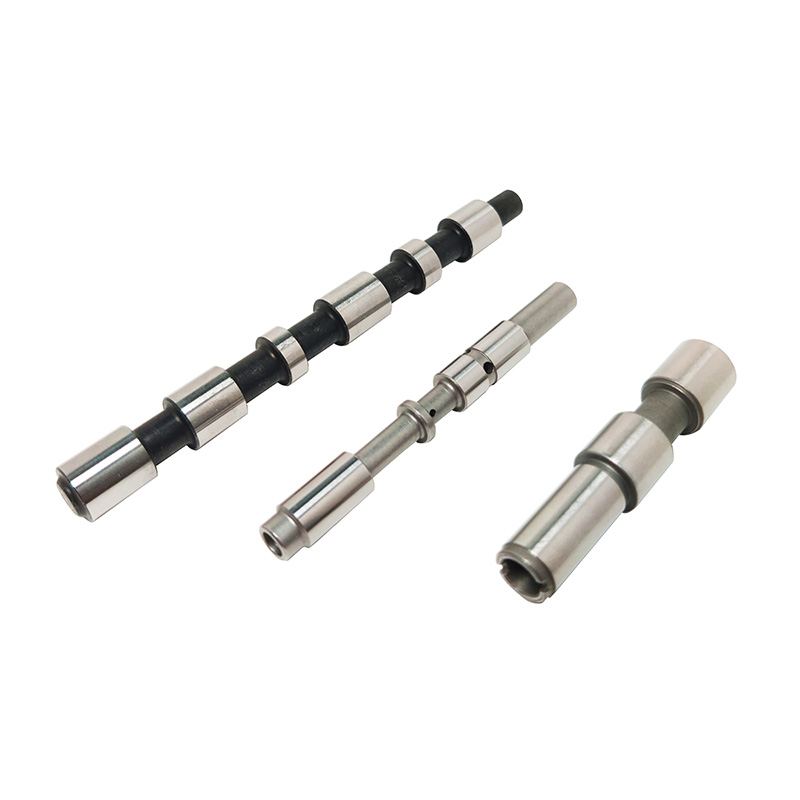
Automotive connectors and fittings are essential components in modern vehicle systems. They provide mechanical connections, support fluid transfer, connect different assemblies, and help maintain reliable interfaces between individual parts. Depending on the application, these components may require precise threads, internal bores, sealing surfaces, grooves, hexagonal profiles, or other customized machining features.
As automotive systems become more integrated and compact, the demand for precision-machined metal connectors and fittings continues to grow. Manufacturers need components that meet specific dimensional requirements, fit accurately during assembly, and maintain consistent quality across production batches.
Dongguan Maozhong Precision Hardware LTD. specializes in custom CNC automotive connectors, fittings, adapters, threaded components, and other precision metal parts. With more than 80 CNC machines, Japanese STAR Swiss-type CNC equipment, multi-axis machining capabilities, and professional inspection equipment, we provide OEM and ODM machining services for customers seeking customized automotive hardware.
We manufacture components according to customer drawings, 3D CAD models, samples, and technical specifications. Our services cover material preparation, CNC machining, deburring, dimensional inspection, surface treatment, and final quality control.
Whether you need a customized metal connector for a new automotive project or a reliable supplier for repeat production, we can evaluate your requirements and recommend a suitable manufacturing solution.
Automotive connectors and fittings come in many shapes and configurations. Some are designed to connect pipes or tubes, while others provide threaded interfaces, mounting points, or connections between mechanical assemblies.
Although many fittings have relatively small dimensions, their manufacturing requirements can be demanding. Thread accuracy, bore dimensions, concentricity, sealing surfaces, and surface quality may all influence the final assembly.
Our custom CNC machining capabilities support the production of different automotive connector and fitting designs, including:
Each project is evaluated according to its drawing, material, tolerance requirements, machining features, surface treatment, and expected production quantity.
Rather than relying only on standard catalog dimensions, we manufacture customized components according to the customer’s specified design.
CNC machining is well suited to manufacturing fittings and connectors with cylindrical features, threads, internal passages, grooves, and multiple diameters.
Depending on the design, the manufacturing process may include CNC turning, Swiss-type machining, drilling, boring, milling, threading, and secondary operations.
CNC turning is suitable for round connectors, threaded adapters, sleeves, and fittings with rotational profiles. It can produce external diameters, shoulders, grooves, chamfers, and other turned features.
Swiss-type CNC machining is especially useful for small-diameter precision components with multiple features. Japanese STAR Swiss-type CNC machines can support efficient production of compact fittings, connector inserts, sleeves, pins, and other precision-turned hardware.
Milling can be used to produce flats, hexagonal profiles, slots, cross features, and other geometries that cannot be completed through turning alone.
Some fittings require internal passages, stepped holes, or accurately positioned bores. Appropriate drilling and boring operations can be selected according to the component’s structure.
Automotive fittings may use internal or external threads, depending on their connection design. Thread dimensions and specifications must be confirmed before production.
Our manufacturing process is planned according to the component’s geometry and required accuracy. Combining suitable operations can help reduce unnecessary setups and improve production efficiency.
Threaded connectors and adapters are widely used in mechanical assemblies and selected automotive fluid systems. Their dimensions must match the corresponding mating components.
Depending on the application, threaded components may include:
Thread specifications should be clearly defined in the engineering drawing. These may include thread type, nominal size, pitch, tolerance class, and any special sealing requirements.
For example, metric threads, unified threads, and pipe threads are not interchangeable simply because their nominal dimensions appear similar. Our team reviews the provided specifications before machining to help avoid interpretation errors.
Thread gauges and suitable measuring equipment can be used to inspect specified thread features. For applications involving pressure or fluid sealing, the customer should also identify the required sealing method and applicable performance tests.
Automotive connectors serve different purposes depending on their design and installation location. Some provide mechanical attachment, while others form part of fluid, electrical, sensor, or control assemblies.
Fluid-system fittings may be used to connect tubes, pipes, hoses, or other components. Their design can include internal passages, threaded ends, sealing faces, and different connection geometries.
Material compatibility is important because the fitting may be exposed to specific fluids, temperatures, pressures, or environmental conditions.
Modern vehicles use sensors to monitor operating conditions and support electronic control systems. Selected sensor assemblies may contain precision metal housings, threaded bodies, inserts, mounting sleeves, and connector interfaces.
These parts often require controlled dimensions to support correct positioning and assembly.
Adapters connect components with different interfaces or dimensions. They may include stepped diameters, internal bores, external threads, hexagonal sections, and custom mounting features.
Small connector bodies are often manufactured using CNC turning or Swiss-type machining. Depending on the design, additional milling or drilling may be required to produce flats, slots, or cross holes.
The appropriate manufacturing method depends on the part’s geometry, tolerance requirements, material, and production quantity.
Material selection influences machinability, strength, corrosion resistance, weight, conductivity, and compatibility with the operating environment.
We support multiple material options for custom CNC automotive components.
Common stainless steel options include SUS303, SUS304, and SUS316.
Stainless steel may be selected for fittings, threaded connectors, sleeves, inserts, and other components where corrosion resistance and mechanical properties are important.
The specific grade should be selected according to the component’s operating environment and technical requirements.
Brass is widely used for precision fittings, connector bodies, inserts, and small threaded components because of its excellent machinability.
It is particularly suitable for components with intricate turned profiles, multiple threads, grooves, and small holes.
The selected brass grade should match the required mechanical and environmental performance.
Aluminum is a lightweight option for selected connector bodies, adapters, housings, and mounting components.
Common options include aluminum 6061 and 7075, subject to the customer’s requirements.
Anodizing may be considered when additional surface protection or a particular appearance is required.
Copper and copper alloys can be considered for specialized components where electrical or thermal conductivity is important.
The appropriate alloy depends on the component’s design and intended function.
Steel may be selected for fittings and mechanical connectors requiring particular strength or durability characteristics.
Material grade, heat-treatment requirements, and surface protection should be confirmed according to the engineering specification.
Titanium can be considered for specialized applications requiring a combination of low density, strength, and corrosion resistance.
Its machining strategy should be evaluated carefully because its cutting characteristics differ from those of more common metals.
Some connector-related components may be manufactured from engineering plastics when insulation, low weight, or specific chemical and wear characteristics are required.
Material selection should be based on the component’s function, working conditions, and customer specifications.
Surface finishing can influence corrosion resistance, wear behavior, appearance, and dimensional characteristics. The correct treatment depends on the base material and the component’s intended application.
Available surface treatment options include:
Anodizing is commonly applied to aluminum components. It creates a controlled oxide layer and can provide different surface appearances.
Hard anodizing may be selected for suitable aluminum parts that require a harder surface layer.
Sandblasting creates a more uniform matte texture and can be used as a surface preparation process or as part of the desired finish.
Black oxide is commonly used on suitable steel components to provide a dark appearance and a degree of surface protection when combined with appropriate post-treatment.
Nickel plating can provide a metallic finish and additional surface protection for compatible materials and applications.
Gold plating can be arranged for selected components when the technical requirements call for this finish, particularly in specialized electrical applications.
Polishing can improve the smoothness and appearance of suitable components. It may also be required for specific contact or sealing surfaces, depending on the design.
Surface treatment requirements should be confirmed before production. For precision connectors, the effect of plating or coating thickness on threads, bores, sealing faces, and other critical dimensions must be considered.
A reliable automotive component supplier needs suitable equipment for different part geometries and production requirements.
Dongguan Maozhong Precision Hardware LTD. operates more than 80 CNC machines and supports customized machining projects across different component types.
Our capabilities include:
Swiss-type CNC machines are particularly useful for compact fittings and connectors that require several turning features in a small space.
Multi-axis machining can support parts with more complex geometries or features that require machining from different directions.
The production process is selected according to the drawing, material, tolerance, component dimensions, and expected quantity.
For suitable components and manufacturing conditions, machining tolerances can reach approximately ±0.005 mm. Actual achievable tolerances depend on part geometry, material, feature size, machining method, and inspection requirements.
The quality of a connector or fitting cannot be evaluated by appearance alone. Important dimensions may include outer diameter, inner diameter, thread dimensions, overall length, shoulder position, bore depth, concentricity, and sealing-face geometry.
Our inspection capabilities include:
Inspection methods are selected according to the drawing and the characteristics that require verification.
For example, optical inspection may be useful for small or intricate features, while thread gauges can help verify specified thread dimensions. CMM inspection can support measurement of selected geometrical features.
A typical workflow includes drawing review, material preparation, CNC machining, deburring, dimensional inspection, surface treatment when required, and final quality checks.
If the component has special requirements, such as pressure resistance, leak testing, plating thickness, or material certification, these should be stated clearly before production so that the applicable requirements can be evaluated.
OEM and ODM machining services provide flexibility for customers who need non-standard automotive connectors and fittings.
We accept technical information in several forms, including:
After reviewing the information, our team evaluates the component structure, machining difficulty, material, tolerance requirements, surface treatment, and order quantity.
We support different production stages, from prototype development to small batches, repeat production, and larger-volume orders.
For new projects, providing complete drawings and clearly identifying critical dimensions can reduce uncertainty during the quotation process.
If a physical sample is provided without a complete drawing, the project can be evaluated according to the available information and the feasibility of obtaining the required measurements.
A structured production process helps ensure that customer requirements are understood before manufacturing begins.
We review the component drawing, dimensions, thread details, material grade, surface finish, and other technical requirements.
The component is evaluated to determine the appropriate CNC equipment and machining sequence.
We prepare a quotation based on the available technical information, material, processing requirements, and order quantity. For suitable projects with complete information, quotation can typically be provided within approximately three hours.
Raw materials are prepared according to the approved requirements.
The selected CNC process is used to manufacture the required features.
Machining burrs are removed where appropriate, and components are prepared for inspection or surface treatment.
Critical dimensions are inspected using suitable measuring equipment.
Specified finishing processes are arranged when required.
Finished components undergo final quality checks and are packaged according to their dimensions, surface condition, and customer requirements.
Custom CNC connectors and fittings may be used in different automotive assemblies, depending on their design and engineering specifications.
Selected connectors, adapters, threaded components, and precision inserts may be used in engine-related mechanisms and supporting systems.
Fittings and adapters may form part of fluid transfer or connection assemblies. Material compatibility and the required sealing method are particularly important for these applications.
Some automotive equipment and related systems use pneumatic components and threaded connectors. CNC machining can produce customized metal interfaces and fittings according to technical drawings.
Precision metal connector bodies, threaded housings, inserts, and mounting components can support the assembly of selected automotive sensors and electronic devices.
Adapters, sleeves, threaded inserts, and customized connector parts can be used to connect or position different mechanical components.
The exact material, machining method, and inspection plan should be determined by the requirements of each application rather than by the product name alone.
Dongguan Maozhong Precision Hardware LTD. maintains the following certifications:
ISO 9001 provides a framework for quality management, standardized procedures, and continuous improvement.
IATF 16949 is an automotive-industry quality management standard designed for organizations within the automotive supply chain.
These systems support consistent production management and quality-control practices. Individual project requirements, customer-specific standards, and inspection documentation are reviewed separately for each order.
Choosing a manufacturer for custom automotive fittings and connectors requires consideration of machining capabilities, quality systems, production capacity, and technical communication.
With more than 80 CNC machines, we can support a range of customized precision machining projects and production requirements.
Japanese STAR Swiss-type CNC equipment is suitable for many small-diameter precision components with multiple turned features.
Our 3-axis, 4-axis, 5-axis, 6-axis, and 7-axis machining capabilities allow us to evaluate different manufacturing approaches for parts with varying geometries.
CMM, CCD optical inspection, thread gauges, micrometers, and other measuring equipment support dimensional verification.
We support stainless steel, aluminum, brass, copper alloys, carbon steel, alloy steel, titanium, and selected engineering plastics.
Finishing options include anodizing, hard anodizing, sandblasting, black oxide, nickel plating, gold plating, and polishing where applicable.
We manufacture components according to customer drawings, CAD files, samples, and technical specifications.
For suitable projects with complete technical information, quotations can typically be provided within approximately three hours.
Our focus is on manufacturing custom components according to agreed technical requirements and maintaining consistent production quality.
Yes. We manufacture customized connectors, fittings, adapters, and other CNC-machined metal parts based on 2D drawings, 3D models, samples, and technical specifications.
Depending on the design, we can produce threaded fittings, adapters, tube connectors, metal connector bodies, threaded sleeves, sensor-related connectors, and other customized components.
Common options include stainless steel, aluminum, brass, copper alloys, carbon steel, alloy steel, titanium, and selected engineering plastics.
Yes. Internal and external threads can be machined according to the specified thread standard, size, pitch, and tolerance requirements.
For suitable components and manufacturing conditions, machining tolerances can reach approximately ±0.005 mm. The achievable tolerance depends on the part geometry, material, machining method, and inspection requirements.
Yes. Available options include anodizing, hard anodizing, sandblasting, black oxide, nickel plating, gold plating, and polishing where suitable.
We support prototype development, small-batch manufacturing, repeat production, and larger-volume orders according to the project requirements.
Please provide the drawing or 3D model, material grade, quantity, thread specifications, tolerance requirements, surface treatment, and any special inspection or testing requirements.
For suitable projects with complete drawings and technical information, a quotation can typically be provided within approximately three hours.
Reliable automotive connectors and fittings depend on accurate machining, appropriate material selection, controlled threads, and consistent inspection. Choosing a manufacturer with suitable CNC equipment and a structured quality-management system can help simplify the sourcing process for customized components.
Dongguan Maozhong Precision Hardware LTD. provides CNC machining services for automotive connectors, fittings, adapters, threaded components, sleeves, inserts, and other precision metal parts.
With more than 80 CNC machines, Japanese STAR Swiss-type CNC equipment, multi-axis machining capabilities, professional inspection equipment, and ISO 9001 and IATF 16949 certifications, we support customers with customized manufacturing solutions for different automotive applications.
Send us your engineering drawing, CAD model, sample, or product specifications to discuss your project. Our team can evaluate the requirements and provide a quotation for your custom CNC automotive components.
If you are interested in this exceptional product, please feel free to contact us through the message box on the left side or the contact information provided below. We are eager to collaborate with you for a brighter future!