
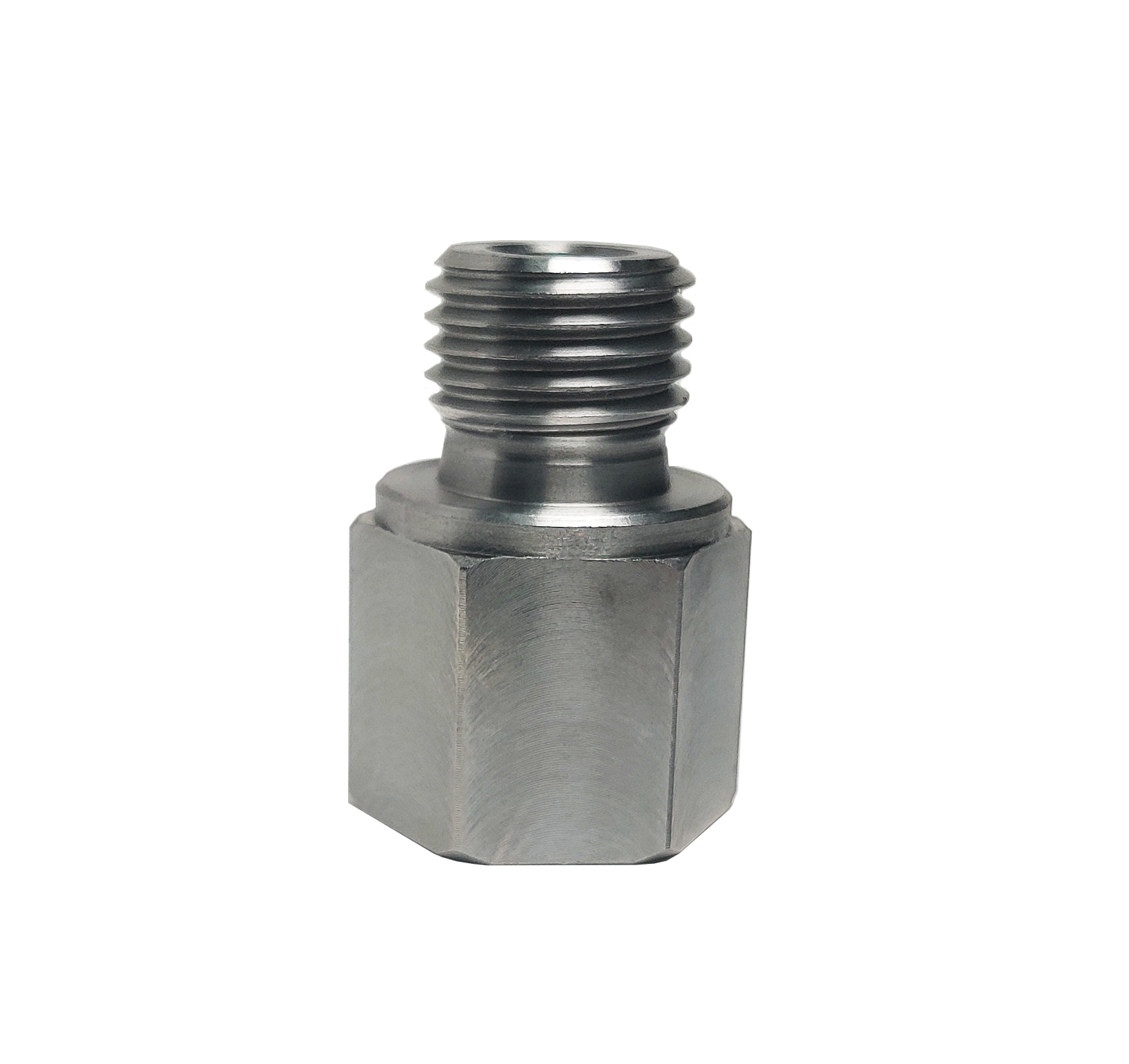
Automotive components are becoming increasingly compact, lightweight, and precisely engineered. As vehicle systems continue to integrate electronic controls, electrical connections, and mechanical assemblies, the demand for customized metal housings and precision-machined covers continues to grow.
Automotive aluminum housings, metal covers, mounting enclosures, protective caps, and precision-machined structural components play important roles in supporting and integrating different vehicle assemblies. These components may require accurate mounting holes, precisely machined surfaces, threaded features, internal cavities, and specific surface finishes to meet customer design requirements.
Dongguan Maozhong Precision Hardware LTD. specializes in custom CNC automotive aluminum housings and precision metal components. With more than 80 CNC machines, Japanese STAR Swiss-type CNC equipment, multi-axis machining capabilities, and professional inspection equipment, we provide customized manufacturing solutions for automotive suppliers and OEM customers.
We manufacture components according to customer drawings, 3D CAD models, samples, and technical specifications. Our machining capabilities support a variety of materials, including aluminum, stainless steel, brass, copper alloys, carbon steel, alloy steel, titanium, and selected engineering plastics.
Whether you need a custom aluminum enclosure, a precision-machined metal cover, a small mounting housing, or another automotive CNC component, our team can evaluate your design and recommend a suitable manufacturing process.
Automotive aluminum housings are used in different mechanical and electronic assemblies. Depending on the design, a housing may provide structural support, accommodate internal components, establish mounting interfaces, or help protect selected parts from external contact.
Compared with heavier metal alternatives, aluminum offers a lower-density material option for applications where weight reduction is an important design consideration. It also provides good machinability and is compatible with several surface finishing processes.
Custom CNC machining allows manufacturers to produce housings with specific dimensions, profiles, openings, mounting points, and other features that may not be available in standard components.
Our custom automotive housing capabilities can support components such as:
Each component is manufactured according to its engineering requirements. Material selection, machining method, dimensional tolerances, surface treatment, and inspection criteria are reviewed before production.
Aluminum is widely used in precision manufacturing because it combines low density with good machinability and a range of finishing possibilities.
For automotive applications, the suitability of aluminum depends on the component’s mechanical loads, operating environment, mounting requirements, temperature conditions, and other engineering factors.
Aluminum has a lower density than steel, making it useful when reducing component weight is a priority.
Depending on the vehicle system and design, aluminum housings and covers may help reduce the weight of an assembly while maintaining the required structural characteristics.
Many aluminum grades can be machined efficiently using CNC turning and milling processes.
This makes aluminum suitable for components that require accurately positioned holes, threaded features, pockets, grooves, stepped profiles, and machined mating surfaces.
Aluminum can be finished using processes such as anodizing, hard anodizing where appropriate, and sandblasting as a standalone or preparatory process.
The selected treatment should match the component’s material grade, dimensional requirements, intended appearance, and service environment.
CNC machining can accommodate customized shapes and dimensions based on engineering drawings.
For example, a housing may require several mounting holes, a recessed area, a machined face, and a threaded interface. These features can be incorporated into a manufacturing plan according to the part’s geometry and tolerance requirements.
Not every aluminum grade performs the same way. Mechanical properties, corrosion behavior, machinability, and finishing compatibility vary between grades.
Selecting the right material is therefore an important part of the design and quotation process.
Automotive housings and covers can have different geometric characteristics. Some are primarily cylindrical, while others include flat surfaces, pockets, slots, cross holes, or complex mounting features.
The appropriate machining process depends on the drawing, material, production volume, and required accuracy.
CNC turning is suitable for components with rotational geometry, such as cylindrical housings, end caps, threaded bodies, sleeves, and precision collars.
Common turning operations include:
Turning can produce consistent diameters and stepped profiles when the component design and process conditions are suitable.
For compact cylindrical components, Swiss-type CNC machining may provide an efficient manufacturing solution.
CNC milling is useful for producing non-rotational features, including mounting faces, slots, pockets, flats, and hole patterns.
For automotive housings, milling may be required to produce:
The machining sequence should be planned to maintain dimensional consistency between related features.
Some components require features on multiple surfaces or at different angles. Multi-axis machining can help produce these geometries by reducing certain setup requirements.
Dongguan Maozhong Precision Hardware LTD. has 3-axis, 4-axis, 5-axis, 6-axis, and 7-axis machining capabilities. The suitable machine and process are selected according to the actual component design.
Not every housing requires multi-axis machining. For simpler parts, conventional turning or milling may be more economical. A drawing-based manufacturing evaluation helps determine the appropriate balance between accuracy, production efficiency, and cost.
Automotive housings often include holes for screws, locating pins, inserts, or other assembly features.
Depending on the design, machining may involve through holes, blind holes, counterbores, countersinks, and internal or external threads.
Thread specifications should clearly identify the required standard, size, pitch, depth, and tolerance. Where threaded features interact with a surface coating, the coating’s effect on final dimensions should also be considered.
A housing’s overall dimensions are only part of its manufacturing requirements. Its functional features must also be produced according to the engineering drawing.
Mounting holes determine how a component connects to another part. Their diameter, position, spacing, and relationship to reference surfaces can affect assembly.
For housings with multiple mounting points, inspection should focus on the critical dimensions specified by the customer.
Some housings require internal cavities or recessed sections to accommodate other components.
These features may involve specific depths, widths, wall thicknesses, and surface conditions. The machinability of the design should be evaluated before production.
Threads may be used to connect covers, mounting hardware, or other components.
Correct thread dimensions and tolerances help support proper assembly. Suitable thread gauges can be used to verify specified thread features.
Machined faces may serve as mounting, alignment, or contact surfaces.
Where flatness, parallelism, perpendicularity, or surface roughness is important, these requirements should be clearly identified in the drawing and incorporated into the inspection plan.
Thin-wall features can introduce additional machining challenges, depending on the material, component shape, and machining method.
The manufacturing approach should account for the geometry and the potential for deformation. Where appropriate, the design may be reviewed to identify practical improvements without changing the customer’s functional requirements.
Material selection affects machining performance, component weight, strength, corrosion resistance, surface finish, and cost.
We support several material options for custom CNC automotive housings and related precision parts.
Aluminum 6061 is commonly used for machined housings, covers, mounting components, and structural parts.
It offers a useful balance of machinability and mechanical properties for many general-purpose engineering applications. It can also be considered for compatible finishing processes, including anodizing.
Aluminum 7075 is an option for designs requiring higher strength than many general-purpose aluminum grades.
Its suitability depends on the component’s loading conditions, geometry, material specifications, and finishing requirements.
The final grade should be selected according to the engineering drawing and the intended application rather than assuming that a higher-strength material is always preferable.
Common stainless steel options include SUS303, SUS304, and SUS316.
Stainless steel may be suitable for automotive housings, threaded bodies, sleeves, adapters, and other components where corrosion resistance or specific mechanical properties are required.
Brass offers excellent machinability and is often considered for precision-turned parts, threaded inserts, connector-related components, and compact metal interfaces.
The exact grade should be selected according to the component’s mechanical and environmental requirements.
Copper and copper alloys may be suitable for specialized components where electrical or thermal conductivity is important.
Machining and finishing requirements depend on the specific alloy and component design.
Steel materials may be selected for components requiring particular mechanical properties or strength characteristics.
Applications can include mounting hardware, pins, shafts, sleeves, and other precision metal parts.
Titanium may be considered for specialized designs requiring a combination of strength, relatively low density, and corrosion resistance.
Its machining characteristics differ from those of common aluminum and steel grades, so the manufacturing process must be evaluated for the selected material and geometry.
Selected non-metallic components can be manufactured from engineering plastics when the design requires characteristics such as electrical insulation, low weight, or specific wear properties.
The final material choice should be based on the component’s functional requirements.
Surface finishing can influence appearance, surface protection, and the properties of a component’s outer layer.
The correct treatment depends on the base material, application, dimensional tolerances, and customer specifications.
Anodizing is commonly used for suitable aluminum components. It creates an oxide layer and can provide different surface appearances.
For automotive housings and covers, anodizing may be selected according to the required appearance and surface protection.
Hard anodizing can be considered for suitable aluminum parts that require a harder surface layer.
The treatment specification should identify the required coating thickness and any critical dimensions that must be maintained after finishing.
Sandblasting can create a consistent matte texture on suitable surfaces.
It may also be used before another finishing process when specified.
Black oxide is generally used for compatible steel components rather than as a standard treatment for aluminum. It can provide a dark finish when the material and process are suitable.
Nickel plating can provide a metallic finish and additional surface protection for compatible materials.
The process should be selected according to the component’s material and technical requirements.
Gold plating may be specified for selected specialized components when required by the design.
Its use depends on the component’s intended function and applicable technical specifications.
Polishing can improve the appearance and surface smoothness of suitable metal components.
For parts with precision mating surfaces, polishing requirements should be defined carefully to avoid affecting critical dimensions.
Surface treatments can affect final dimensions. Coating thickness may influence hole diameters, threads, fits, and mating surfaces.
For this reason, surface treatment should be included during the quotation and engineering review stages. If a particular coating thickness, color, appearance, or surface roughness is required, the specification should be confirmed before production.
Precision automotive housings may contain several interacting features. Consistent dimensions are important when parts must fit with other components or meet defined assembly requirements.
For suitable components and manufacturing conditions, machining tolerances can reach approximately ±0.005 mm. Actual achievable tolerances depend on material, geometry, feature size, machining method, and inspection requirements.
Not every dimension requires the same tolerance. Applying unnecessarily tight tolerances to every feature can increase production costs without improving the component’s function.
A practical quality plan identifies critical dimensions and defines how they will be measured.
CMM equipment supports the measurement of selected dimensions and geometrical features. It can be used where the component’s design requires more detailed dimensional verification.
CCD optical inspection equipment can help inspect suitable small features and component profiles.
The inspection method is selected according to the size, shape, and required measurement characteristics of the part.
Micrometers and calipers are used for routine dimensional checks, including suitable external dimensions, thicknesses, and lengths.
Height gauges can support measurement of specified heights and selected positional dimensions when used with an appropriate setup.
Thread gauges can be used to verify specified internal or external thread characteristics.
Microscopes can help inspect small details, edges, burrs, and other features that require magnified visual examination.
Where surface roughness is specified, suitable measuring equipment can be used to check the relevant surface characteristics.
The actual inspection method and acceptance criteria should be agreed according to the drawing and customer requirements.
Dongguan Maozhong Precision Hardware LTD. operates more than 80 CNC machines and supports custom precision machining projects for different industries, including automotive applications.
Our equipment and process capabilities include:
Swiss-type CNC machining is particularly useful for small-diameter turned parts and components with multiple precision features.
For housings and covers with flat faces, mounting holes, or non-rotational features, milling and other suitable machining operations can be incorporated into the process.
Our team reviews each drawing to determine a suitable manufacturing strategy based on component geometry, material, tolerances, and order quantity.
Custom manufacturing allows automotive suppliers to obtain housings and covers designed for their own products and assemblies.
We support OEM and ODM machining projects based on:
After reviewing the technical information, our team evaluates the material, machining complexity, manufacturing sequence, and finishing requirements.
We can support prototype development, small-batch manufacturing, repeat orders, and larger production runs according to project needs.
For new projects, complete drawings and clearly defined critical dimensions help improve quotation accuracy and reduce uncertainty during production planning.
If a physical sample is available but the drawing is incomplete, the project can be assessed based on the available information and the feasibility of confirming the required dimensions.
Custom metal housings and covers can be used in a variety of automotive assemblies. The exact application depends on the customer’s product design and engineering requirements.
Selected electronic assemblies use metal housings, covers, mounting bases, and protective enclosures.
The component design may require mounting holes, internal cavities, threaded features, and specific surface finishes.
Mechanical systems may incorporate machined covers, caps, housings, spacers, and support components.
These parts may provide mounting interfaces or help maintain the relative position of assembled components.
Some sensor assemblies incorporate metal bodies, covers, mounting components, and threaded interfaces.
The materials, dimensions, and sealing features depend on the specific sensor design.
Custom CNC-machined brackets, mounting bases, and small structural components can be designed to meet specific installation requirements.
Hole positions, reference surfaces, and overall dimensions are important when these parts must align with other components.
Not all automotive metal components belong to a standard product category. Some are designed specifically for a customer’s assembly.
CNC machining supports the production of these customized parts based on engineering drawings and technical specifications.
A clear manufacturing workflow helps ensure that customer requirements are reviewed before production begins.
Drawing Review
We review the drawing or CAD model, material grade, dimensions, tolerances, surface treatment, and any special requirements.
Engineering Evaluation
The component geometry is assessed to identify a suitable machining method and production sequence.
Quotation
The quotation considers material, machining complexity, order quantity, surface treatment, and inspection requirements. For suitable projects with complete technical information, a quotation can typically be provided within approximately three hours.
Material Preparation
Raw materials are prepared according to the approved specifications.
CNC Machining
The part is manufactured using the selected CNC equipment and machining processes.
Deburring and Cleaning
Appropriate deburring and cleaning operations prepare the component for inspection and finishing.
Dimensional Inspection
Critical dimensions are checked using suitable measurement equipment according to the agreed inspection requirements.
Surface Treatment
Specified finishing processes are arranged when required.
Final Inspection
The finished component is checked according to the relevant drawing and customer requirements.
Packaging
Parts are packaged according to their material, shape, surface condition, and customer instructions.
Dongguan Maozhong Precision Hardware LTD. maintains the following certifications:
ISO 9001 provides a quality-management framework for standardized procedures, process control, and continual improvement.
IATF 16949 is an automotive-industry quality management standard developed for organizations in the automotive supply chain.
These certifications support our commitment to structured manufacturing and quality-management practices. Specific product requirements, inspection criteria, and documentation needs are reviewed separately for each project.
Selecting a CNC machining supplier involves more than comparing unit prices. Material availability, machining capability, dimensional control, finishing options, and communication all affect the overall manufacturing process.
More Than 80 CNC Machines
Our equipment base supports a range of precision machining projects and component designs.
Japanese STAR Swiss-Type CNC Equipment
Swiss-type CNC machining is suitable for compact precision parts with small diameters and multiple turned features.
Multi-Axis Machining Capabilities
Our 3-axis, 4-axis, 5-axis, 6-axis, and 7-axis machining capabilities allow us to evaluate different production approaches according to component geometry.
Multiple Material Options
We support aluminum, stainless steel, brass, copper alloys, carbon steel, alloy steel, titanium, and selected engineering plastics.
Professional Inspection Equipment
CMM, CCD optical inspection, micrometers, thread gauges, microscopes, and surface roughness measuring equipment support dimensional and visual checks.
Customized Surface Treatments
Available options include anodizing, hard anodizing, sandblasting, black oxide, nickel plating, gold plating, and polishing where appropriate for the material and application.
OEM and ODM Support
We manufacture components based on customer drawings, CAD models, samples, and technical specifications.
Responsive Quotation
For suitable projects with complete technical information, quotations can typically be provided within approximately three hours.
We manufacture customized aluminum housings, metal covers, caps, mounting bases, protective enclosures, threaded bodies, and other precision CNC components according to customer drawings.
Yes. Aluminum 6061 and 7075 can be evaluated for suitable projects. The final material should be selected according to the component’s mechanical requirements, geometry, finishing needs, and technical specifications.
Yes. Depending on the design, CNC turning, milling, drilling, and threading operations can be combined to produce the specified features.
For suitable components and manufacturing conditions, machining tolerances can reach approximately ±0.005 mm. Actual achievable tolerances depend on material, geometry, feature size, process, and inspection requirements.
Anodizing and hard anodizing can be arranged for suitable aluminum components according to the customer’s finishing specifications.
Yes. We support customized manufacturing based on 2D drawings, 3D CAD files, samples, and technical specifications.
Yes. We can evaluate prototype, small-batch, repeat-order, and larger-volume projects according to the component design and production requirements.
Please provide the component drawing or CAD model, material grade, order quantity, dimensional tolerances, surface treatment, and any special inspection requirements.
For suitable projects with complete technical information, quotations can typically be provided within approximately three hours.
Custom automotive housings and metal covers require careful consideration of material selection, component geometry, machining accuracy, surface finishing, and inspection requirements.
Dongguan Maozhong Precision Hardware LTD. provides CNC machining services for customized automotive housings, aluminum covers, mounting components, and other precision metal parts. With more than 80 CNC machines, Japanese STAR Swiss-type CNC equipment, multi-axis machining capabilities, professional inspection equipment, and ISO 9001 and IATF 16949 certifications, we support customers with drawing-based manufacturing solutions.
If you are sourcing custom CNC automotive aluminum housings, precision metal covers, mounting bases, caps, or other machined components, send us your drawing, CAD model, sample, or technical specifications.
Our team can review your requirements, evaluate the manufacturing process, and prepare a quotation for your project.
If you are interested in this exceptional product, please feel free to contact us through the message box on the left side or the contact information provided below. We are eager to collaborate with you for a brighter future!