
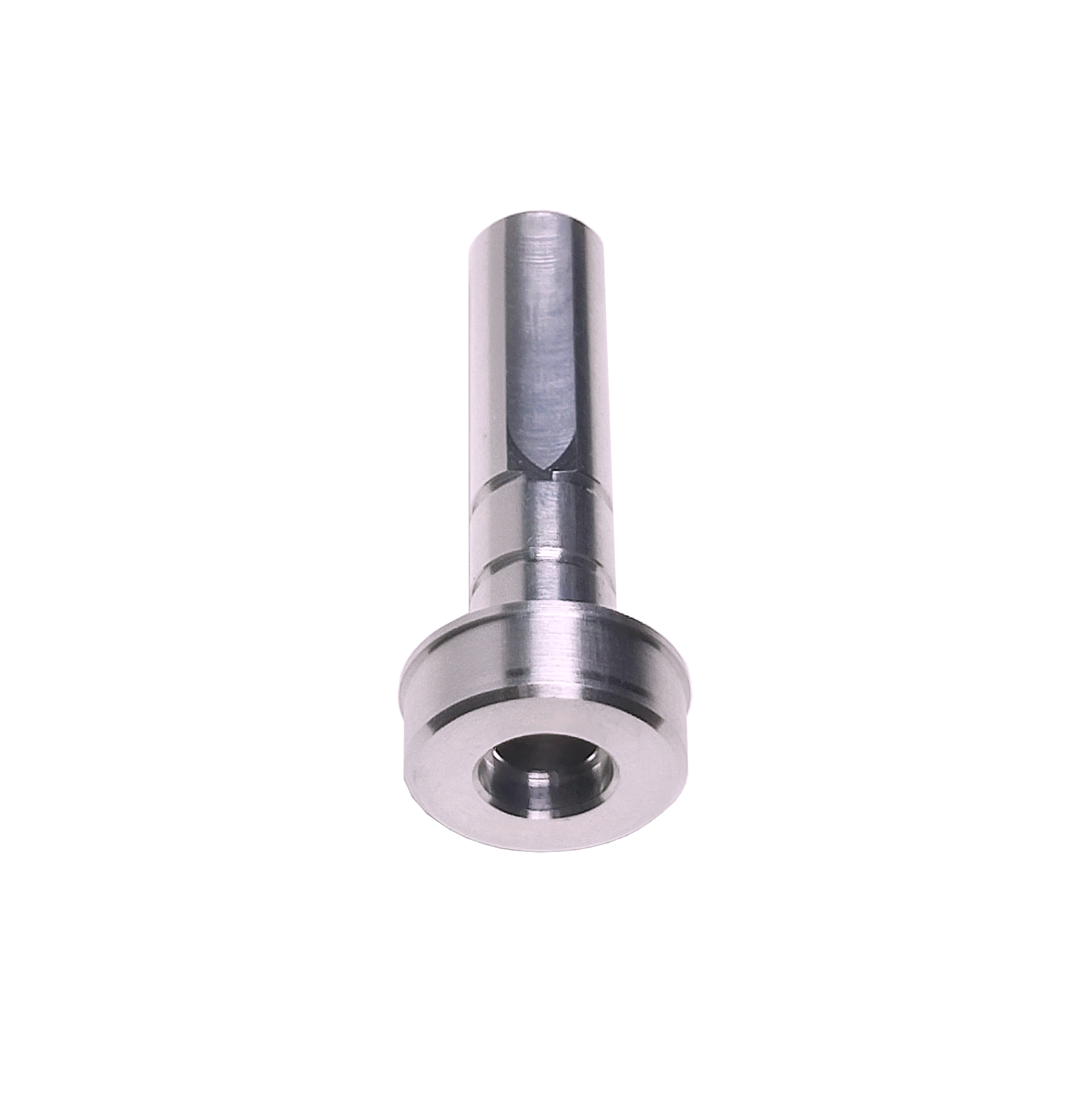
Modern vehicles rely on a growing number of sensors to monitor operating conditions, support electronic control systems, and improve vehicle functionality. From temperature and pressure monitoring to position detection and electronic control, sensor assemblies require precision components that fit accurately and perform consistently within their intended operating environments.
Automotive sensor housings, mounting bases, threaded bodies, metal covers, connector interfaces, sleeves, and other precision components are important parts of these assemblies. Their dimensions, material properties, surface finish, and machining accuracy can influence installation, protection, alignment, and compatibility with other components.
Dongguan Maozhong Precision Hardware LTD. specializes in custom CNC automotive sensor housings and precision metal components. With more than 80 CNC machines, Japanese STAR Swiss-type CNC equipment, multi-axis machining capabilities, and professional inspection equipment, we provide customized machining services for automotive suppliers, electronic component manufacturers, and OEM customers.
We manufacture components according to customer drawings, 3D CAD models, samples, and technical specifications. Our capabilities include CNC turning, Swiss-type machining, milling, drilling, threading, deburring, dimensional inspection, and surface treatment.
Whether you need a compact threaded sensor body, a precision-machined metal housing, a mounting component, or another customized automotive part, our team can evaluate your requirements and provide a suitable manufacturing solution.
Automotive sensors are used in different vehicle systems to measure physical conditions and provide information to electronic control units. Depending on the application, sensor assemblies may require metal housings, mounting components, threaded interfaces, sleeves, inserts, and precision-machined connector bodies.
These components often have specific dimensional requirements. For example, a sensor housing may need a precisely machined bore, a threaded mounting section, a flat sealing surface, or a particular outer diameter to fit into the final assembly.
Our custom CNC machining services support the production of components such as:
Each part is manufactured according to its drawing and technical requirements. We do not rely on a single standard design because automotive sensor components can vary significantly in shape, size, material, and function.
Before production, our team reviews the component geometry, material, tolerance requirements, surface treatment, and expected order quantity.
Sensor housings provide a mechanical structure for selected sensing elements and related components. Depending on the design, a housing may protect internal parts, provide a mounting interface, support alignment, or connect with another assembly.
A CNC-machined housing may contain multiple features, including:
CNC turning is particularly suitable for housings with cylindrical geometry. For designs with additional holes, flats, slots, or off-center features, milling and other secondary operations may be required.
The manufacturing method depends on the component’s geometry, material, required tolerances, and production volume.
For small cylindrical sensor housings and compact threaded bodies, Swiss-type CNC machining can be an efficient option. For more complex designs, multi-axis machining can help produce different features with fewer setups.
Many automotive sensor designs use threaded metal bodies or mounting interfaces. These components may need to fit into an engine-related assembly, fluid system, bracket, housing, or other mechanical structure.
Threaded sensor components may include internal threads, external threads, shoulders, sealing faces, and stepped diameters.
Important specifications may include:
Clear engineering drawings help ensure that the thread and mounting requirements are interpreted correctly.
Our CNC machining processes can produce internal and external threads according to customer specifications. Thread gauges and suitable measuring tools can be used to verify specified thread features.
Where the component includes a sealing interface, the sealing design and dimensional requirements should be identified before production. If a project requires leak testing, pressure testing, or another performance test, the requirement should also be confirmed separately.
CNC turning is an effective process for manufacturing components with rotational features. It is commonly used for sensor bodies, sleeves, pins, shafts, threaded inserts, collars, and other precision automotive hardware.
Depending on the drawing, CNC turning operations may include:
Combining multiple operations can reduce unnecessary handling and improve manufacturing efficiency.
For components with small diameters and several closely related features, Swiss-type CNC machining offers additional advantages. It can support stable machining of compact precision parts and is particularly useful when long, slender, or small-diameter geometries are involved.
For sensor housings that require milled features or more complex geometries, turning can be combined with suitable secondary machining processes.
Not every automotive sensor component has a purely cylindrical structure. Some designs require flats, mounting slots, cross holes, non-round profiles, or features located at different angles.
CNC milling and multi-axis machining can be used to manufacture these features according to the customer’s drawing.
Typical applications include:
Selecting the correct machining strategy is important for balancing dimensional accuracy, production efficiency, and cost.
Our team evaluates the component design before choosing the appropriate equipment and machining sequence.
Material selection affects the component’s weight, strength, machinability, corrosion resistance, thermal behavior, and compatibility with the operating environment.
We support multiple materials for custom automotive CNC components.
Common options include SUS303, SUS304, and SUS316.
Stainless steel may be suitable for sensor bodies, threaded housings, adapters, sleeves, and other components where corrosion resistance and mechanical properties are important.
The appropriate grade depends on the design, operating environment, and required material specifications.
Aluminum offers low density and good machinability, making it useful for lightweight sensor housings, covers, mounting bases, and electronic component enclosures.
Common options include aluminum 6061 and 7075, depending on the required mechanical properties.
Anodizing may be considered when additional surface protection or a particular appearance is required.
Brass is widely used for precision-turned components because of its excellent machinability.
It can be considered for selected connector bodies, threaded inserts, sensor interfaces, and other compact metal components.
The material grade should be selected according to the required mechanical and environmental performance.
Copper and copper alloys may be appropriate for specialized components where electrical or thermal conductivity is important.
The suitability of a particular alloy depends on the component’s function and technical specifications.
Steel materials can be selected for components that require particular mechanical properties or strength characteristics.
Depending on the grade and application, steel may be used for mounting parts, threaded components, pins, shafts, and other precision hardware.
Titanium can be considered for specialized applications requiring a combination of low density, strength, and corrosion resistance.
Because titanium has different machining characteristics from common metals, the manufacturing strategy should be evaluated according to the component geometry and material grade.
Certain sensor-related components can also be manufactured from engineering plastics when electrical insulation, low weight, or specific wear and environmental characteristics are required.
The final material should always be determined by the actual engineering requirements rather than by appearance alone.
Surface treatment can improve appearance, surface protection, or other specified surface characteristics. The appropriate process depends on the base material and the component’s intended application.
Available finishing options include:
Anodizing is commonly used for aluminum housings, mounting bases, and covers. It creates a controlled oxide layer and can provide different surface appearances.
Hard anodizing can be considered for suitable aluminum components that require a harder surface layer.
Sandblasting can create a more uniform matte texture and may be used as part of the preparation process for other finishes.
Black oxide is commonly applied to suitable steel components to provide a dark finish and additional surface protection when combined with appropriate post-treatment.
Nickel plating can provide a metallic surface finish and additional protection for compatible materials and applications.
Gold plating can be arranged for selected components when the technical requirements call for this type of finish, particularly in specialized electrical applications.
Polishing can improve the appearance and smoothness of suitable metal surfaces.
For precision sensor housings, surface treatment should be considered during the design and quotation stages. Coating thickness can affect threads, bores, mating surfaces, and other critical dimensions.
If a component has a specific surface roughness or coating thickness requirement, it should be clearly indicated in the technical documentation.
The ability to manufacture customized sensor components depends on selecting suitable equipment for each design.
Dongguan Maozhong Precision Hardware LTD. operates more than 80 CNC machines and supports a wide range of precision machining projects.
Our capabilities include:
Swiss-type CNC equipment is especially suitable for small-diameter sensor bodies, threaded components, sleeves, pins, and other compact precision parts.
Multi-axis machining can support components with more complicated geometries or features located on different surfaces.
For suitable components and manufacturing conditions, machining tolerances can reach approximately ±0.005 mm. Actual achievable tolerances depend on the material, geometry, feature size, machining process, and inspection requirements.
Our team evaluates each drawing individually rather than assuming that every feature can be produced to the same tolerance.
Dimensional consistency is important when sensor components must fit accurately into an assembly.
Depending on the design, critical features may include bore diameter, outer diameter, overall length, thread dimensions, hole positions, concentricity, and the dimensions of mounting or sealing surfaces.
Our inspection capabilities include:
Different inspection methods are selected according to the component’s geometry and technical requirements.
CMM equipment can support measurement of selected dimensions and geometrical features. CCD optical inspection is useful for evaluating suitable small or intricate features. Thread gauges can be used to verify specified threaded interfaces.
A typical production workflow includes drawing review, material preparation, CNC machining, deburring, dimensional inspection, surface treatment where required, and final quality checks.
If a sensor component requires special testing, such as leak testing, pressure testing, electrical performance verification, or coating thickness measurement, the requirement should be confirmed before production. Such tests are not assumed to be included in standard machining inspection.
OEM and ODM manufacturing services allow customers to obtain components tailored to their own product designs.
We support custom machining projects based on:
After reviewing the available technical information, our team evaluates the machining process, material, component complexity, and production quantity.
We can support different manufacturing stages, including prototype development, small-batch orders, repeat production, and larger-volume manufacturing.
For new projects, providing complete drawings and clearly identifying critical dimensions helps reduce uncertainty during the quotation process.
When a physical sample is available but the drawing is incomplete, the project can be evaluated based on the available information and the feasibility of obtaining the required measurements.
Automotive sensor components are used in different vehicle systems, depending on the sensor type and system design.
Selected sensor assemblies may use metal bodies, threaded housings, sleeves, or mounting interfaces to position and protect the sensing element.
Certain pressure-sensor designs incorporate precision metal housings and threaded interfaces. The required materials and dimensions depend on the operating conditions and sealing design.
Position and speed sensing assemblies may use precision mounting components, sleeves, shafts, housings, and metal interfaces to support installation and alignment.
Some sensor components are installed in fluid systems. In these applications, material compatibility, sealing interfaces, and applicable pressure requirements must be considered during component design.
Metal housings, covers, inserts, mounting bases, and connector interfaces may be used in selected electronic assemblies.
The exact component requirements depend on the customer’s design and intended application. CNC machining alone does not determine the final sensor’s performance; the complete assembly and its validation process remain important.
A structured manufacturing process helps connect customer requirements with production and inspection.
Drawing Review
We review the 2D drawing, 3D model, material grade, tolerances, surface treatment, and special requirements.
Engineering Evaluation
The component geometry is assessed to determine an appropriate machining strategy.
Quotation
We prepare a quotation based on material, machining complexity, quantity, finishing, and other project requirements. For suitable projects with complete technical information, quotation can typically be provided within approximately three hours.
Material Preparation
The specified raw material is prepared according to the approved requirements.
CNC Machining
The component is produced using the selected CNC equipment and machining process.
Deburring and Cleaning
Machining burrs are removed where appropriate, and the parts are prepared for inspection or surface treatment.
Dimensional Inspection
Critical dimensions are checked using suitable measuring equipment.
Surface Treatment
Specified finishing processes are arranged when required.
Final Quality Checks
Finished components undergo final inspection according to the agreed requirements.
Packaging
Products are packaged according to their dimensions, surface condition, and customer requirements.
Dongguan Maozhong Precision Hardware LTD. maintains the following certifications:
ISO 9001 provides a quality-management framework covering standardized procedures, quality control, and continual improvement.
IATF 16949 is an automotive-industry quality management standard developed for organizations within the automotive supply chain.
These certifications support our commitment to structured manufacturing and quality-management practices. Project-specific specifications, customer requirements, and inspection documentation are reviewed separately for each order.
Selecting a supplier for automotive sensor components requires consideration of machining capabilities, dimensional control, material options, inspection equipment, and production flexibility.
More Than 80 CNC Machines
Our equipment base supports different component designs and production requirements.
Japanese STAR Swiss-Type CNC Equipment
Swiss-type machining is well suited to compact precision components with small diameters and multiple turned features.
Multi-Axis CNC Capabilities
Our 3-axis, 4-axis, 5-axis, 6-axis, and 7-axis machining capabilities allow us to evaluate different production approaches according to component geometry.
Professional Inspection Equipment
CMM, CCD optical inspection, thread gauges, micrometers, and other measurement tools support dimensional verification.
Multiple Material Options
We support stainless steel, aluminum, brass, copper alloys, carbon steel, alloy steel, titanium, and selected engineering plastics.
Customized Surface Treatments
Available options include anodizing, hard anodizing, sandblasting, black oxide, nickel plating, gold plating, and polishing where applicable.
OEM and ODM Support
We manufacture according to customer drawings, CAD models, samples, and technical specifications.
Responsive Quotation
For suitable projects with complete technical information, quotations can typically be provided within approximately three hours.
We manufacture custom sensor housings, threaded metal bodies, mounting bases, covers, sleeves, inserts, adapters, connector interfaces, and other precision CNC components according to customer drawings.
Yes. We can evaluate 2D drawings, 3D CAD files, samples, and technical specifications for customized production.
Common options include stainless steel, aluminum, brass, copper alloys, carbon steel, alloy steel, titanium, and selected engineering plastics.
For suitable components and manufacturing conditions, machining tolerances can reach approximately ±0.005 mm. Actual achievable tolerances depend on the material, geometry, dimensions, machining method, and inspection requirements.
Yes. Internal and external threads can be manufactured according to the specified thread standard, size, pitch, and tolerance requirements.
Yes. Available options include anodizing, hard anodizing, sandblasting, black oxide, nickel plating, gold plating, and polishing where applicable.
Yes. We support prototypes, small batches, repeat production, and larger-volume manufacturing according to the project requirements.
Please provide the drawing or CAD model, material grade, quantity, dimensional tolerances, surface treatment, and any special inspection or testing requirements.
For suitable projects with complete technical information, quotations can typically be provided within approximately three hours.
Precision automotive sensor components require careful attention to dimensions, material selection, machining methods, and inspection requirements. A reliable manufacturing partner can help customers produce customized housings, threaded bodies, mounting components, and other metal parts according to their engineering specifications.
Dongguan Maozhong Precision Hardware LTD. provides custom CNC machining services for automotive sensor housings and precision metal components. With more than 80 CNC machines, Japanese STAR Swiss-type CNC equipment, multi-axis machining capabilities, professional inspection equipment, and ISO 9001 and IATF 16949 certifications, we support customers from prototype development to repeat production.
If you are sourcing custom automotive sensor housings, threaded sensor bodies, metal covers, mounting bases, sleeves, inserts, or other CNC automotive components, send us your drawing, CAD model, sample, or product specifications.
Our team can review your requirements, evaluate the machining process, and provide a quotation for your project.
If you are interested in this exceptional product, please feel free to contact us through the message box on the left side or the contact information provided below. We are eager to collaborate with you for a brighter future!