
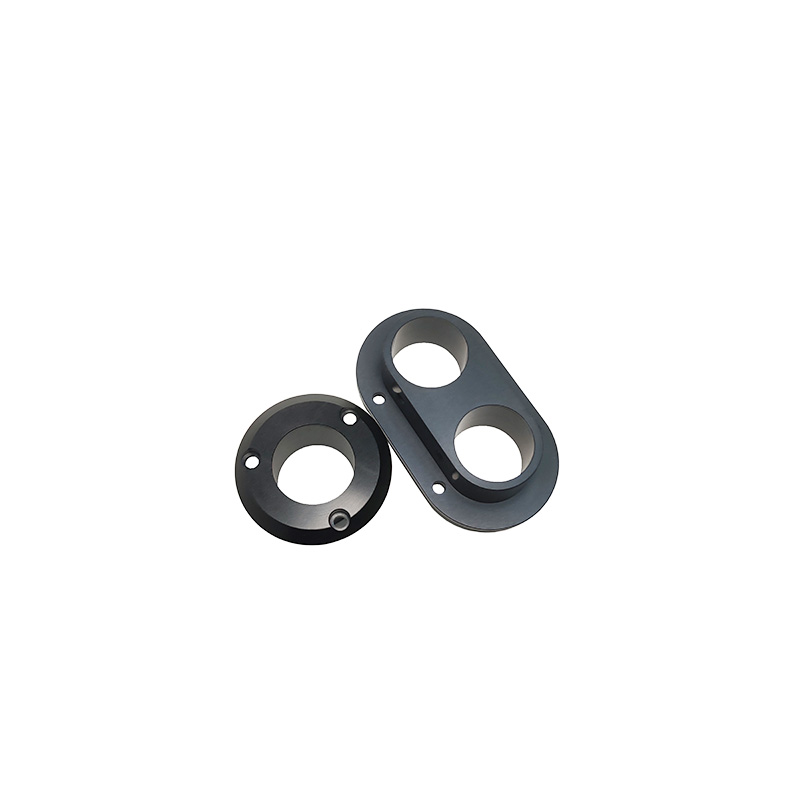
In modern automotive manufacturing, small metal components often have a much greater impact on vehicle performance than their size suggests. Bushings, sleeves, spacers, collars, pins, shafts, inserts, and other precision-machined components are widely used in suspension systems, steering assemblies, transmission systems, engine components, braking systems, sensor assemblies, and various automotive mechanisms.
For these applications, dimensional accuracy, concentricity, surface quality, material selection, and consistent production are critical. A component that looks simple may require tight tolerances and carefully controlled machining processes to ensure reliable assembly and long-term service performance.
Dongguan Maozhong Precision Hardware LTD. provides custom CNC machining services for automotive manufacturers, distributors, engineering companies, and OEM customers. With more than 80 CNC machines, Japanese STAR Swiss-type CNC equipment, multi-axis machining capabilities, and professional inspection equipment, we manufacture precision automotive metal components according to customer drawings, 3D models, samples, and technical specifications.
Our capabilities cover prototypes, small batches, repeat production, and larger-volume OEM orders. From precision automotive bushings and sleeves to custom shafts, pins, fittings, connectors, and threaded components, we focus on producing stable, repeatable, and application-specific CNC parts.
Automotive components are frequently exposed to vibration, friction, temperature changes, mechanical loads, moisture, chemicals, and repeated movement. Because of these conditions, manufacturers need components that can maintain their dimensional integrity and functional performance during service.
CNC machining provides an effective solution for producing complex automotive metal components with consistent dimensions and repeatability.
Depending on the design, we can manufacture:
Many of these products are small in size but require careful control of critical dimensions such as inner diameter, outer diameter, length, concentricity, thread dimensions, and positional relationships.
Our CNC machining processes are designed to maintain stable production quality from the first sample through repeat orders.
Bushings and sleeves are among the most common precision-machined components used in mechanical automotive assemblies.
A bushing may be designed to provide spacing, support, alignment, controlled movement, or protection between two components. A sleeve may be used around a shaft, inside a housing, between mating parts, or as a structural insert.
The correct manufacturing process depends on the geometry, material, tolerance, surface requirements, and production quantity.
Our CNC turning capabilities are particularly suitable for cylindrical automotive components such as:
For components with small diameters and multiple machining features, Swiss-type CNC machining can provide efficient production and excellent dimensional consistency.
Automotive mechanisms frequently require pins and shafts to transmit movement, maintain alignment, or connect multiple components.
Typical examples include:
These parts may require several operations within a relatively small overall size. A component may include multiple diameters, grooves, chamfers, threads, flats, cross holes, or other features.
By combining CNC turning and multi-axis machining capabilities, we can manufacture these components according to detailed engineering drawings while maintaining consistency between production batches.
Automotive systems use many types of fittings and connectors for mechanical, fluid, electrical, and sensor-related applications.
Depending on the design, precision CNC machining can be used to manufacture:
Thread quality is particularly important for threaded automotive components. Poor thread dimensions or inconsistent machining can lead to assembly difficulties, leakage problems, or poor mechanical engagement.
We use thread gauges and other inspection tools as part of our quality-control process to verify critical threaded features according to customer requirements.
Material selection has a direct influence on component strength, corrosion resistance, machinability, weight, wear resistance, and surface treatment compatibility.
We support a wide range of materials for custom automotive CNC components.
Aluminum is widely used when low weight, corrosion resistance, and good machinability are important.
Common options include:
Aluminum CNC parts can be used for housings, brackets, spacers, connectors, sensor components, mounting hardware, and other lightweight automotive applications.
Surface treatments such as anodizing can further improve surface appearance and protection.
Stainless steel is suitable for applications requiring corrosion resistance, strength, and good dimensional stability.
Common materials include:
Stainless steel is often selected for fittings, shafts, connectors, bushings, threaded components, sensor-related hardware, and other components exposed to moisture or demanding environmental conditions.
Brass offers good machinability and is widely used for precision fittings, connectors, inserts, terminals, and other automotive hardware.
Its excellent machinability makes it particularly suitable for small turned components with threads, grooves, holes, and detailed profiles.
Copper and copper alloys can be selected for components where electrical conductivity or thermal performance is important.
Typical applications include certain terminals, connectors, electrical components, and specialized automotive hardware.
Steel provides high strength and is suitable for components subjected to mechanical loading or wear.
Depending on the application, carbon steel and alloy steel can be machined into:
Additional surface treatment may be used to improve corrosion resistance or surface characteristics.
Titanium can be considered for specialized applications where high strength-to-weight ratio and corrosion resistance are important.
Although titanium requires more demanding machining conditions than many conventional metals, our CNC equipment and manufacturing experience allow us to process titanium components according to customer specifications.
Not every automotive component needs to be made from metal.
We can also support selected engineering plastics for lightweight, insulation, wear, or application-specific requirements.
Material options may include engineering-grade plastic materials according to the customer’s drawings and technical requirements.
Surface treatment can improve corrosion resistance, hardness, wear performance, appearance, or compatibility with the final assembly.
Depending on the material and application, available finishing options include:
Anodizing is commonly applied to aluminum components. It can improve surface protection while providing different appearance options.
It is suitable for aluminum housings, brackets, spacers, connectors, and other precision automotive components.
Hard anodizing provides a harder surface than standard anodizing and can be considered for aluminum parts exposed to increased wear or friction.
Sandblasting can provide a consistent surface texture and help prepare aluminum or other suitable materials for additional finishing processes.
Black oxide is commonly used for suitable steel components and can provide a dark surface appearance with additional surface protection when combined with appropriate post-treatment.
Nickel plating can improve surface protection and provide a durable, uniform metallic finish for suitable components.
Gold plating can be used for specialized electrical or connector-related applications where specific conductivity and surface characteristics are required.
Polishing can improve surface smoothness and appearance. It may be used for visible components or parts where surface quality is an important functional consideration.
Surface treatment requirements should always be considered together with material, dimensional tolerances, and functional requirements because finishing processes can influence final dimensions.
Reliable automotive components require more than simply placing raw material into a CNC machine.
Our manufacturing process generally includes several controlled stages.
Before production, our engineering team reviews the customer’s drawings, 3D models, material requirements, tolerances, threads, surface finishes, and other specifications.
Potential manufacturing issues can be identified before machining begins.
We evaluate the component geometry and determine an appropriate machining strategy.
The process may involve:
The selected process depends on the component design and production requirements.
The specified material is prepared according to the production requirements.
For repeat automotive orders, material consistency and production traceability are important for maintaining stable quality.
The component is manufactured using the appropriate CNC equipment.
For small cylindrical automotive parts, Swiss-type CNC machines can efficiently produce multiple precision features in one machining cycle.
For more complex components, multi-axis CNC machining can reduce the need for multiple setups and improve feature-to-feature accuracy.
After machining, burrs are removed from appropriate edges and features.
This is especially important for small automotive components because excessive burrs can interfere with assembly or affect the function of mating parts.
Critical dimensions are inspected using appropriate measuring equipment.
Depending on the component, inspection may include:
If required, components are sent for the specified surface treatment.
Finished components undergo final inspection before packaging and shipment.
This helps ensure that production parts meet the agreed technical requirements.
Production capability is an important consideration when selecting an automotive CNC supplier.
Dongguan Maozhong Precision Hardware LTD. operates more than 80 CNC machines and has extensive experience producing small and medium-sized precision metal components.
Our equipment capabilities include:
Swiss-type CNC technology is particularly useful for automotive components with small diameters and complex turning features.
For parts requiring milling, drilling, cross holes, flats, or off-center features, multi-axis machining can help reduce setup requirements and improve manufacturing efficiency.
With more than 80 CNC machines, we can also support repeat production and higher-volume requirements while maintaining standardized manufacturing processes.
Precision machining requires precise measurement.
Our inspection capabilities include:
For suitable components and manufacturing conditions, machining tolerances can reach approximately ±0.005 mm.
The achievable tolerance depends on the material, component geometry, feature size, machining process, tolerance location, and inspection requirements. Rather than applying one tolerance to every component, we evaluate each drawing individually.
This approach helps customers receive parts that are manufactured according to their actual engineering requirements.
Automotive companies often need custom components rather than standard catalog products.
We provide OEM and ODM CNC machining services based on:
Customers can provide a complete drawing, or our engineering team can review the available technical information and evaluate the manufacturability of the design.
We support different production stages, including:
Prototype Production
Useful for validating a new automotive component design before larger production.
Small Batch Production
Suitable for testing, development, aftermarket applications, and low-volume specialized products.
Repeat Production
For customers who require regular supply of the same CNC components.
Mass Production
For automotive applications with stable demand and larger order quantities.
This flexibility allows us to work with customers throughout different stages of product development.
Our precision CNC components can be used across multiple automotive systems.
Precision-machined parts can be used in selected engine-related assemblies, including shafts, spacers, bushings, plugs, fittings, and other supporting hardware.
Transmission assemblies require accurate positioning and reliable mechanical interfaces.
CNC-machined shafts, sleeves, pins, collars, spacers, and other components can be manufactured according to application-specific specifications.
Steering systems may require precision pins, bushings, sleeves, connectors, and mounting components.
Dimensional consistency is especially important where components interact with moving mechanisms.
Suspension applications can involve bushings, spacers, collars, pins, shafts, and other precision metal components.
Material and surface treatment selection can be adapted to the expected mechanical and environmental conditions.
Selected braking-related hardware can require precision-machined pins, spacers, fittings, connectors, and other small metal components.
Modern vehicles contain a large number of sensors and electronic systems.
CNC machining can be used to manufacture sensor housings, connector bodies, inserts, mounting hardware, and other precision metal components.
Precision fittings, adapters, sleeves, and connectors can be used in various fluid-management applications.
Material selection is particularly important when components are exposed to specific fluids, temperatures, or corrosive environments.
Automotive suppliers need more than one good sample. They need repeatable production.
For this reason, we focus on process consistency throughout the manufacturing cycle.
Important production factors include:
For repeat orders, maintaining consistency between production batches is particularly important.
Our goal is to provide automotive customers with precision components that can be integrated into their assembly process without unnecessary dimensional variation.
Choosing a CNC automotive parts supplier involves evaluating machining capability, quality control, equipment, communication, and production flexibility.
There are several reasons customers can consider us for custom automotive CNC components.
Our production capacity allows us to support prototype projects as well as recurring production requirements.
Japanese STAR Swiss-type CNC equipment is well suited for small-diameter precision automotive components with multiple turning features.
Our 3-axis, 4-axis, 5-axis, 6-axis, and 7-axis capabilities allow us to select an appropriate machining strategy for different component geometries.
CMM, CCD optical inspection, micrometers, thread gauges, microscopes, and other inspection equipment support dimensional verification.
We process aluminum, stainless steel, brass, copper alloys, steel, titanium, and engineering plastics for different automotive applications.
Anodizing, hard anodizing, sandblasting, black oxide, nickel plating, gold plating, and polishing are available according to material and application requirements.
We manufacture components according to customer drawings, CAD files, samples, and technical specifications.
For suitable projects with complete technical information, quotations can typically be provided within approximately 3 hours.
Quality management is particularly important for automotive supply chains.
Dongguan Maozhong Precision Hardware LTD. maintains:
IATF 16949 is especially relevant to automotive manufacturing because it provides a quality-management framework designed for the automotive industry and its supply chain.
These certifications support our commitment to standardized processes, quality management, continual improvement, and consistent manufacturing performance.
To provide an accurate quotation, customers should ideally provide:
If a drawing contains special requirements, such as tight concentricity, surface roughness, or specific inspection documentation, these should be clearly identified.
Complete technical information allows our engineering team to evaluate the component more efficiently and provide a more accurate quotation.
Quality control starts before machining.
Our inspection approach may include incoming material verification, first-piece inspection, in-process inspection, and final inspection depending on the project.
Critical dimensions are checked against the customer’s engineering specifications.
For small precision components, optical inspection and CMM measurement can be particularly useful when conventional measuring tools are not sufficient for complex geometries.
Thread gauges help verify threaded features, while surface roughness equipment can be used when surface requirements are specified.
This combination of manufacturing and inspection capabilities helps us maintain stable quality throughout production.
Automotive precision components must be packaged carefully to prevent damage during transportation.
Depending on the component size, material, surface finish, and customer requirements, packaging can include:
For components with polished, plated, or precision-machined surfaces, protective packaging helps reduce the risk of scratches and surface damage.
Packaging requirements can be discussed during the quotation and production stages.
We manufacture custom CNC automotive components including bushings, sleeves, shafts, pins, spacers, collars, fittings, connectors, inserts, threaded components, sensor housings, brackets, and other precision-machined hardware.
Yes. We provide OEM and ODM machining services based on 2D drawings, 3D models, samples, and technical specifications.
Common materials include aluminum, stainless steel, brass, copper alloys, carbon steel, alloy steel, titanium, and selected engineering plastics.
For suitable components and manufacturing conditions, machining tolerances can reach approximately ±0.005 mm. The actual achievable tolerance depends on the component geometry, material, feature size, process, and inspection requirements.
Yes. Our Japanese STAR Swiss-type CNC machines are particularly suitable for small-diameter precision turned components.
Yes. Available options include anodizing, hard anodizing, sandblasting, black oxide, nickel plating, gold plating, and polishing.
Yes. We support prototypes, small batches, repeat production, and larger-volume orders.
Yes. With more than 80 CNC machines and multiple machining capabilities, we can support recurring and higher-volume production requirements depending on part complexity and order quantity.
For suitable projects with complete technical information, quotations can typically be provided within approximately 3 hours.
Automotive manufacturing increasingly depends on small, high-precision components that must fit accurately into larger assemblies. Bushings, sleeves, shafts, pins, spacers, connectors, fittings, and inserts may appear simple, but their dimensional accuracy and production consistency can have a direct influence on assembly efficiency and product reliability.
A capable CNC machining supplier should therefore provide more than machining alone. Engineering evaluation, material selection, process control, inspection, surface treatment, packaging, and repeat-production capability all contribute to a successful automotive component supply chain.
Dongguan Maozhong Precision Hardware LTD. combines more than 80 CNC machines, Japanese STAR Swiss-type CNC technology, multi-axis machining capabilities, professional inspection equipment, ISO 9001 and IATF 16949 certifications, and OEM/ODM manufacturing experience to provide precision CNC automotive components for customers in different industries and markets.
If you are looking for a manufacturer for custom automotive bushings, precision sleeves, shafts, pins, spacers, fittings, connectors, or other CNC-machined automotive metal parts, we can review your drawings and technical requirements and develop a suitable production solution.
If you are interested in this exceptional product, please feel free to contact us through the message box on the left side or the contact information provided below. We are eager to collaborate with you for a brighter future!