
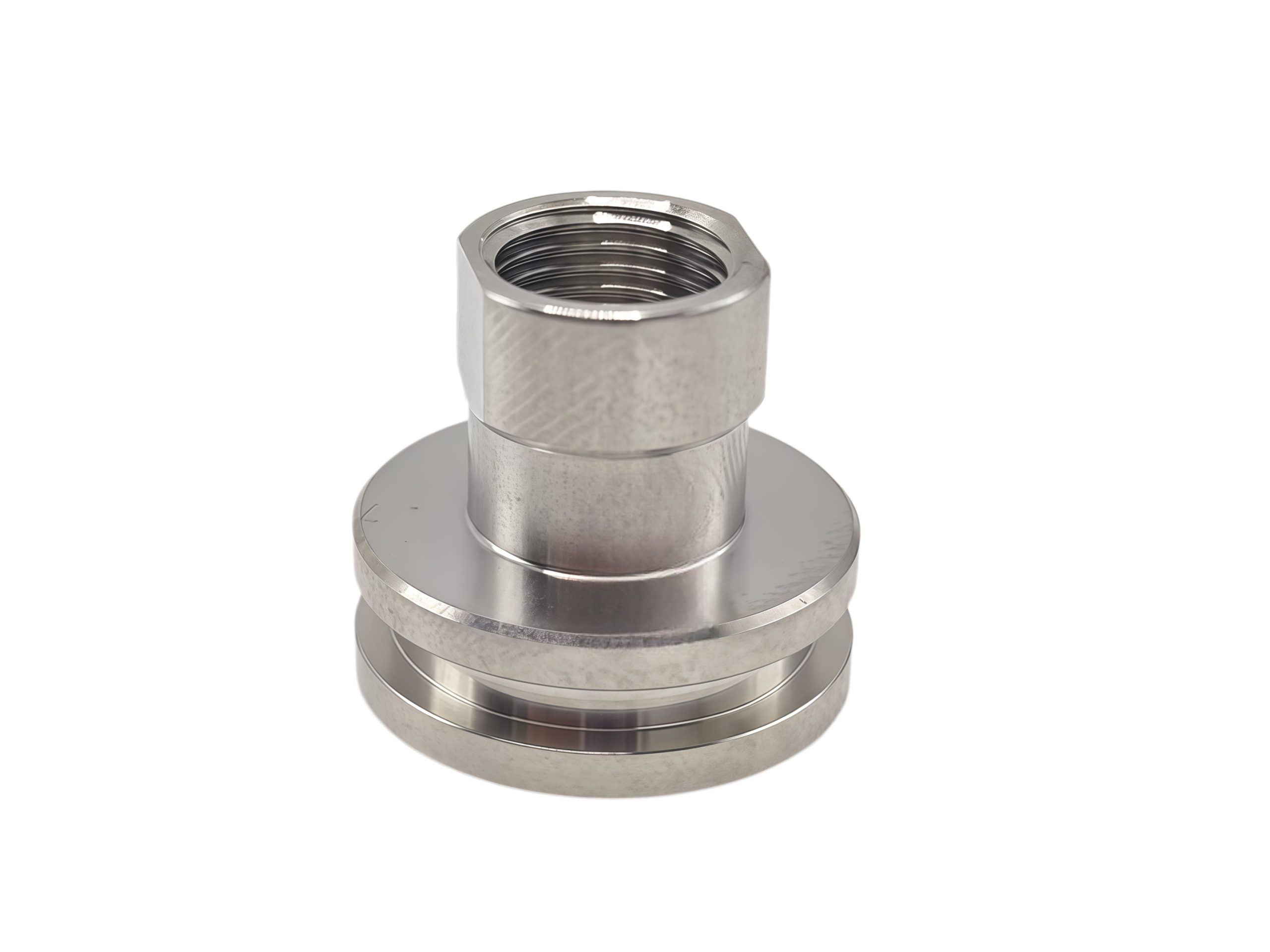
The automotive industry requires components that deliver consistent dimensional accuracy, reliable mechanical performance, and stable quality across large production volumes. From small precision connectors and shafts to bushings, fittings, sleeves, pins, housings, and custom metal components, every part must meet clearly defined engineering requirements.
As a professional precision machining manufacturer, Dongguan Maozhong Precision Hardware LTD. provides custom CNC automotive parts for automotive manufacturers, Tier suppliers, engineering companies, and industrial customers. We manufacture precision metal components according to customer drawings, 3D models, samples, and technical specifications.
With advanced CNC machining equipment, Japanese STAR Swiss-type CNC machines, professional inspection equipment, and an experienced production team, we support prototype development, small-batch production, and high-volume manufacturing.
Our capabilities cover a wide range of automotive precision components, including CNC turned parts, automotive bushings, shafts, pins, sleeves, fittings, connectors, threaded components, and other custom-machined metal parts.
Whether you need a simple turned component or a complex multi-operation automotive part, our engineering and production teams can help transform your design into a stable production solution.
Automotive components are often produced according to highly specific drawings and technical requirements. Unlike standard off-the-shelf hardware, OEM automotive parts may require customized dimensions, threads, grooves, holes, chamfers, surface finishes, and material specifications.
Our CNC machining service is designed for these custom manufacturing requirements.
We can manufacture automotive components based on:
The production process begins with technical drawing review. Our engineers evaluate dimensions, material, machining features, tolerances, and production requirements before moving into manufacturing.
This helps identify potential machining difficulties at an early stage and provides customers with a clearer quotation and production plan.
For automotive customers, consistency is particularly important. A component may need to be produced thousands or even hundreds of thousands of times while maintaining stable dimensions and reliable quality.
Our CNC machining processes are therefore designed around repeatability, process control, and inspection.
CNC turning is one of the most important manufacturing processes for small and medium-sized automotive metal components.
Turning is particularly suitable for parts with cylindrical or rotational features, such as:
Our CNC turning capabilities allow us to combine multiple machining operations within a controlled production process.
Depending on the component design, machining operations may include:
This allows multiple features to be produced accurately within one manufacturing workflow.
For components requiring high dimensional consistency, Swiss-type CNC machining can provide an efficient solution, particularly for small-diameter precision parts and components with multiple features.
Bushings and sleeves are common automotive precision components used in various mechanical assemblies.
Although their structures may appear relatively simple, manufacturing requirements can be highly specific. Important dimensions can include:
Our CNC machining process allows customized bushings and sleeves to be produced according to customer drawings.
Materials can be selected according to the application and engineering requirements, including brass, stainless steel, aluminum, steel, copper alloys, and other engineering materials.
For OEM projects, we can also manufacture different sizes and configurations based on customer-specific designs.
Typical customized products include:
CNC Bushings
Precision turned bushings manufactured according to specified inner and outer diameters.
Metal Sleeves
Custom cylindrical sleeves for mechanical assemblies and automotive systems.
Spacers
Precision spacers used to maintain specified distances between components.
Collars
CNC-machined collars with customized dimensions, grooves, or fastening features.
Small shafts and pins are another important category of precision automotive components.
Depending on the design, automotive shafts may contain multiple diameters, grooves, shoulders, threads, holes, or other machined features.
Our CNC turning equipment can manufacture these components according to detailed engineering drawings.
Typical products include:
Dimensional consistency is especially important for components that interface with other parts.
For example, an incorrect shaft diameter can affect assembly conditions, while dimensional variation in a precision pin can influence the fit between mating components.
For this reason, machining and inspection need to work together throughout the manufacturing process.
Automotive systems often require small metal fittings, connectors, adapters, and threaded components.
These parts can be manufactured from materials such as:
Depending on the design, CNC machining can produce:
Custom fittings can be manufactured according to customer drawings rather than relying solely on standard dimensions.
This makes CNC machining suitable for OEM projects where the component needs to match a specific assembly or system.
Modern vehicles contain a large number of small metal components that may not be visible after assembly but still play important mechanical or functional roles.
Examples include:
These components may be relatively small, but manufacturing accuracy can still be critical.
Our focus is therefore not simply on producing metal parts, but on producing components with stable dimensions and consistent quality.
Material selection is an important part of automotive component manufacturing.
Different materials provide different combinations of strength, corrosion resistance, machinability, weight, electrical conductivity, and surface characteristics.
We support a variety of commonly used engineering materials.
Stainless steel is widely used when corrosion resistance and mechanical durability are required.
Common options include:
Stainless steel can be used for fittings, shafts, bushings, connectors, fasteners, and other precision components.
Aluminum is valued for its low density, machinability, and corrosion resistance.
Common grades include:
Aluminum CNC parts can be suitable for applications where weight reduction is an important consideration.
Brass provides good machinability and is commonly used for precision fittings, bushings, connectors, inserts, and other small components.
Brass can also provide a distinctive appearance and good dimensional stability for suitable applications.
Steel is often selected when higher mechanical strength and durability are required.
Depending on customer specifications, we can process different steel materials for customized automotive components.
Copper and copper alloys can be used for components where electrical or thermal conductivity is important.
Titanium can be considered for specialized applications where its combination of strength, weight, and corrosion resistance meets the engineering requirements.
Certain automotive components may also require engineering plastics rather than metal.
Depending on the project, we can discuss suitable engineering materials according to the customer’s technical requirements.
Machining is only one part of the manufacturing process.
Depending on the material and application requirements, automotive CNC components may require additional surface treatment.
We can support several finishing options.
Anodizing is commonly applied to aluminum components to improve surface characteristics and provide a controlled appearance.
Hard anodizing can provide a harder surface layer for suitable aluminum components where increased surface durability is required.
Sandblasting can create a more uniform surface texture and improve the visual appearance of suitable components.
Black oxide is commonly used on suitable steel components to provide a black surface appearance and additional surface protection.
Nickel plating can be used where surface appearance, corrosion resistance, and other specified surface properties are required.
For specialized components requiring gold plating, the treatment can be arranged according to customer specifications.
Surface treatment requirements should always be considered together with the base material and functional requirements of the component.
A reliable automotive CNC parts supplier needs a controlled manufacturing process from drawing review through final inspection.
Our typical workflow includes the following stages.
The customer provides a drawing, 3D model, sample, or technical specification.
Our engineering team reviews:
After reviewing the product requirements, we evaluate the machining process and provide a quotation.
For suitable projects, we can provide a quotation within 3 hours.
The specified raw material is prepared according to the production requirements.
Material selection is controlled according to the customer’s specifications.
The component is manufactured using suitable CNC equipment.
Depending on the product structure, machining may include turning, drilling, threading, grooving, milling, and other operations.
After machining, parts are carefully processed to remove machining burrs and unwanted edges.
Dimensions and critical features are inspected using appropriate measuring equipment.
If required, components are sent for the specified surface treatment.
Finished parts undergo final inspection before packaging and shipment.
This process helps maintain consistency between production batches.
For small precision automotive components, Swiss-type CNC machining can provide important manufacturing advantages.
Our production capabilities include Japanese STAR Swiss-type CNC equipment, which is suitable for precision turning applications involving small-diameter components and complex geometries.
Swiss-type machining can support features such as:
The equipment is particularly suitable for producing high volumes of small precision components with repeatable machining conditions.
Our CNC equipment portfolio supports 3-axis, 4-axis, 5-axis, 6-axis, and 7-axis machining capabilities, depending on the specific production requirement.
Automotive customers often require stable quality across every production batch.
Our quality control process therefore covers both dimensional inspection and process monitoring.
Typical inspection equipment includes:
Critical dimensions can be inspected according to customer drawings and quality requirements.
For precision CNC parts, our machining capability can reach tolerances of approximately ±0.005 mm, depending on the component structure, material, size, and machining conditions.
Not every dimension should automatically be assigned the same tolerance. The appropriate tolerance is evaluated according to the actual engineering requirements of the component.
Different automotive projects require different production strategies.
We support:
For new product development, prototypes can help customers verify dimensions, assembly conditions, and design details before moving to larger production volumes.
Small-batch manufacturing is suitable for product testing, engineering validation, replacement parts, and initial production.
For established automotive components, we can support larger production quantities with controlled machining processes and inspection procedures.
The production method can be discussed according to the customer’s annual demand, component structure, material, and required delivery schedule.
We provide OEM and ODM manufacturing services for customers who require customized automotive metal components.
Instead of purchasing standard parts and modifying them afterward, customers can send their original design directly to our engineering team.
We can manufacture according to:
Customer Drawing → Engineering Review → CNC Production → Inspection → Surface Treatment → Final QC
This model can simplify supplier communication and allow customers to source customized components from a single manufacturing partner.
Our team can also discuss manufacturability before production if the customer has questions about material selection, machining structure, tolerances, or finishing.
Precision CNC automotive components can be used across different automotive systems and assemblies.
Typical application categories include:
Precision shafts, pins, bushings, sleeves, spacers, and other mechanical components.
Custom fittings, connectors, adapters, and precision metal components.
Small precision housings, connectors, sleeves, and machined metal components.
Precision conductive components, connectors, terminals, and customized metal parts.
Machined fittings, adapters, sleeves, and other components manufactured according to customer specifications.
Customized brackets, fasteners, inserts, knobs, shafts, and other precision metal components.
The actual application and material selection should always be determined according to the customer’s engineering requirements.
Choosing the right CNC automotive parts manufacturer involves more than comparing unit prices.
A reliable supplier should be able to provide stable production, consistent quality, clear communication, and technical support.
We specialize in precision CNC machining and small metal components.
Our production facility is equipped with more than 80 CNC machines to support different machining requirements and production volumes.
Our Swiss-type CNC machining capabilities are suitable for precision turned automotive components and other small complex parts.
Depending on product geometry, material, and process conditions, our machining capability can achieve tolerances down to approximately ±0.005 mm.
For suitable projects, quotation can be provided within approximately 3 hours after receiving the required technical information.
We manufacture according to customer drawings, samples, and technical specifications.
Inspection equipment and quality-control procedures are integrated into the production process.
Our machining facility includes a range of CNC equipment designed for precision component manufacturing.
Key capabilities include:
Different machines are selected according to the geometry, size, material, tolerance, and production quantity of each component.
This allows us to develop a suitable production process rather than applying the same machining method to every product.
Quality management is an important part of automotive component manufacturing.
Our company maintains the following certifications:
ISO 9001
ISO 9001 supports our quality management system and provides a structured framework for production and quality control.
IATF 16949
IATF 16949 is specifically associated with quality management in the automotive industry and supports systematic quality control for automotive-related manufacturing processes.
These systems help establish consistent procedures for production, inspection, quality management, and continuous improvement.
One of the advantages of working with a custom CNC manufacturer is that customers do not need to adapt their design to a standard catalog product.
Instead, the manufacturing process begins with the customer’s requirements.
A typical project can follow this workflow:
2D / 3D Drawing
↓
Engineering Review
↓
Material Selection
↓
Quotation
↓
Prototype / Sample
↓
CNC Production
↓
Dimensional Inspection
↓
Surface Treatment
↓
Final QC
↓
Packaging & Shipment
This workflow allows technical requirements to remain connected throughout the production process.
We manufacture customized CNC automotive components including shafts, pins, bushings, sleeves, spacers, collars, fittings, connectors, threaded components, brackets, housings, and other precision-machined metal parts.
Yes. We support OEM and ODM manufacturing based on 2D drawings, 3D CAD files, samples, and technical specifications.
Common materials include stainless steel, aluminum, brass, copper, steel, titanium, and engineering plastics. Other materials can be discussed according to the project.
Our machining capability can reach approximately ±0.005 mm for suitable components. Actual achievable tolerance depends on product geometry, material, size, machining process, and inspection requirements.
Yes. Available finishing options include anodizing, hard anodizing, sandblasting, black oxide, nickel plating, gold plating, polishing, and other customer-specified treatments where applicable.
Yes. We can discuss prototype, small-batch, and mass-production requirements.
For suitable projects with complete technical information, quotation can be provided within approximately 3 hours.
Yes. Our CNC production capacity and inspection system support larger-volume automotive component projects.
Yes. Quality inspection is integrated into the manufacturing process, with dimensional and visual inspection performed according to product requirements.
Finding a reliable manufacturer for precision automotive components can simplify the sourcing process and improve production consistency.
Whether you need CNC turned automotive parts, precision bushings, automotive shafts, sleeves, pins, fittings, connectors, or other custom metal components, Dongguan Maozhong Precision Hardware LTD. can manufacture according to your drawings and technical requirements.
Our combination of CNC machining capabilities, Japanese STAR Swiss-type equipment, professional inspection systems, ISO 9001 and IATF 16949 quality management, and OEM/ODM manufacturing experience allows us to support customers from prototype development through volume production.
Send us your 2D drawing, 3D model, sample, material specification, or project requirements to start a quotation.
We can review your requirements, recommend a suitable machining process, and provide a competitive manufacturing solution for your automotive precision components.
If you are interested in this exceptional product, please feel free to contact us through the message box on the left side or the contact information provided below. We are eager to collaborate with you for a brighter future!