
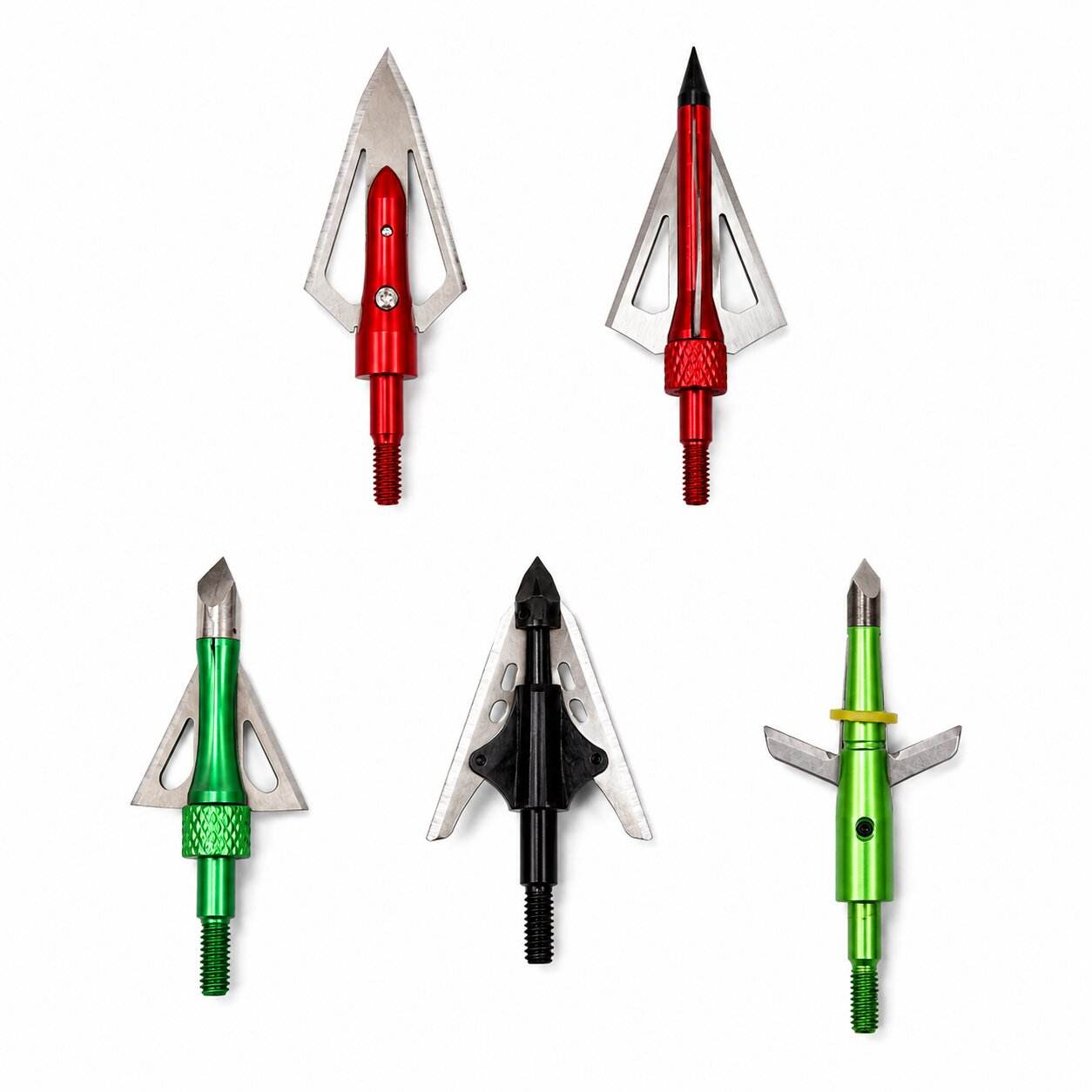
Precision is important in every part of an archery system.
Although an arrow may look like a relatively simple product, its performance depends on the dimensional consistency of many small components. The front-end component, insert, bushing, collar, threaded part, or other metal hardware needs to fit correctly with the arrow shaft and maintain stable positioning during assembly and use.
For archery equipment manufacturers, distributors, and professional sporting-goods brands, sourcing these small metal components from a reliable CNC machining supplier can make a significant difference in product consistency.
We manufacture precision CNC archery arrow components according to customer drawings, samples, dimensions, materials, and application requirements. Our capabilities cover brass arrow inserts, aluminum arrow components, stainless steel bushings, threaded arrow hardware, precision sleeves, collars, spacers, and other customized metal components used in archery equipment.
With CNC turning and Swiss-type machining capabilities, we can produce small-diameter components with complex profiles and consistent dimensions. Suitable components can achieve machining tolerances down to ±0.005 mm, depending on material, geometry, size, and drawing requirements.
Our goal is simple: provide accurately manufactured archery components that are consistent from prototype to production.
Archery arrow components are the mechanical parts used to assemble, connect, position, reinforce, or interface with different sections of an arrow system.
Depending on the product design, these components can include:
Many of these products are relatively small.
That makes manufacturing accuracy especially important.
A small change in diameter can influence the fit between an insert and an arrow shaft. A difference in thread dimensions can affect compatibility with a corresponding component. An inconsistent overall length can influence assembly positioning.
For this reason, precision CNC machining for archery components is an important manufacturing solution for companies developing their own archery products.
Arrow inserts are one of the most important categories of precision metal components used in arrow assemblies.
An insert is generally designed to interface with the arrow shaft and provide a suitable mechanical connection for the corresponding front-end component.
Depending on the design, an insert may contain:
Because the component needs to fit accurately inside or onto another part, dimensional consistency is essential.
Brass is a popular material for customized arrow inserts because it combines good machinability, density, durability, and a distinctive metallic appearance.
Brass components can be manufactured with:
For manufacturers looking for custom brass arrow inserts, CNC turning provides a flexible way to produce different dimensions and designs without relying on standard off-the-shelf components.
Brass can also be used for other small archery hardware such as bushings, sleeves, spacers, and threaded components.
Bushings are another common type of precision archery component.
A bushing is generally used to create a controlled interface between two components.
Depending on the design, an arrow bushing may help:
The most important dimensions of a bushing are usually its internal diameter, external diameter, and overall length.
For a simple cylindrical bushing, these dimensions may appear straightforward.
However, when the component is small, dimensional variation becomes more significant relative to the overall size of the part.
This is why precision CNC turning is well suited to small archery bushings.
Sleeves and collars are useful for designs that require controlled positioning or mechanical connection between components.
A customized sleeve can include several diameters along its length.
For example, a single component may have:
CNC turning allows these features to be produced in one controlled machining process where appropriate.
This can reduce unnecessary assembly operations and help maintain consistency between related dimensions.
Threaded interfaces are common in many archery products.
A threaded component must match the corresponding thread accurately.
Important thread characteristics include:
Poorly controlled threads can result in:
For custom archery hardware, thread specifications should therefore be clearly defined on the engineering drawing.
Our CNC machining process can accommodate different custom thread specifications according to customer drawings.
Material selection affects machining performance, weight, strength, corrosion resistance, surface appearance, and the final application of the component.
We support several commonly requested materials for customized precision archery components.
Brass is one of the most practical materials for small precision turned components.
Advantages include:
Brass is commonly selected for:
For customers looking for custom brass archery components, CNC turning can provide a wide range of customized geometries.
Aluminum is a lightweight option for archery hardware.
Common grades include:
Aluminum provides a useful combination of:
It can be used for customized arrow components, sleeves, collars, inserts, and other lightweight precision parts.
Anodizing can also be applied when additional surface protection or a specific appearance is required.
Stainless steel is suitable for applications where corrosion resistance and mechanical strength are important.
Common materials include:
Stainless steel can be used for:
SUS303 is often attractive for precision CNC machining because of its machinability, while SUS304 and SUS316 can be considered when corrosion resistance is a greater priority.
Steel can be considered when higher mechanical strength is required.
CNC-machined steel components may include:
Depending on the application, surface treatment can be used to improve corrosion resistance or surface durability.
Copper and copper alloys may be selected when electrical or thermal conductivity is important, although they are less common than brass or aluminum for many standard archery hardware applications.
Their machinability and surface requirements should be evaluated according to the exact component design.
Titanium provides a combination of high strength, low density, and corrosion resistance.
It can be considered for specialized high-performance sporting equipment where weight and mechanical properties are particularly important.
Because titanium requires appropriate machining parameters and tooling, manufacturing feasibility should be evaluated before production.
The correct surface finish can improve appearance, corrosion resistance, wear resistance, and overall product quality.
Depending on the material, available finishing options may include:
Anodizing is commonly applied to aluminum.
It can provide:
Hard anodizing produces a harder surface layer and can be considered for aluminum components that experience greater mechanical contact or wear.
Sandblasting creates a controlled matte surface and is often used before anodizing.
It can give aluminum components a more uniform industrial appearance.
Black oxide can be used for certain steel components to provide a dark surface appearance and additional surface protection.
Nickel plating can provide:
It can be suitable for certain steel, brass, and other compatible components depending on the required process.
Polishing can improve surface smoothness and appearance.
For small brass or stainless-steel components, a polished surface can provide a clean and refined finish.
Producing a high-quality precision archery component requires more than simply putting material into a CNC machine.
The manufacturing process begins with understanding the customer’s drawing and continues through machining, finishing, inspection, and packaging.
Before production, we review:
If there is a potentially difficult or unclear feature, it can be discussed before production.
This is particularly important for customized archery components because even a small dimensional change can affect compatibility with another part.
The specified raw material is prepared according to the production requirements.
For bar-stock components, the material diameter should be appropriate for the finished component and machining process.
Material consistency is important for maintaining stable production results.
CNC turning is particularly suitable for cylindrical archery components.
It can produce:
For small-diameter components, Swiss-type CNC machining can provide stable support during the machining process.
Swiss-type CNC machining is especially useful for miniature components.
The cutting area can remain close to the guide bushing, which helps provide stable support for small-diameter workpieces.
This makes Swiss CNC machining suitable for products such as:
For manufacturers requiring repeatable small components, Swiss-type machining can provide an efficient production solution.
Small components require careful dimensional control.
For example, a bushing may have an outside diameter of only a few millimeters.
If the diameter changes too much, the component may no longer fit correctly.
Likewise, an insert with an incorrect internal thread may not properly match its mating component.
Important dimensions can include:
For suitable components, our CNC machining capability can achieve tolerances down to ±0.005 mm.
The actual achievable tolerance depends on the material, geometry, size, feature location, and production conditions.
Quality control is an essential part of precision component manufacturing.
After machining, parts can be inspected according to customer drawings and specifications.
Inspection equipment may include:
Critical dimensions such as diameter, length, and thread-related features can be checked using suitable measurement equipment.
Visual inspection helps identify:
For threaded components, thread gauges or other suitable measurement methods can be used to verify thread conformity.
Burr control is particularly important for small metal components.
Machining can leave small sharp edges around:
These burrs should be removed according to the component requirements.
Proper deburring can improve:
For precision archery hardware, even a small burr can become noticeable because the component itself is relatively small.
Our manufacturing process is designed around customized OEM and ODM production.
Customers can provide:
We can then evaluate the component and determine an appropriate manufacturing process.
This allows customers to develop their own proprietary archery components rather than being limited to standard catalog dimensions.
New archery products often begin with prototypes.
A prototype can be used to evaluate:
After prototype testing, dimensions or materials may be adjusted.
CNC machining is particularly useful during this stage because it allows customized components to be produced without requiring large-scale production tooling.
Once the design has been finalized, the same component can move into small-batch or mass production.
Different customers have different production requirements.
Some archery brands may need only a small quantity for product testing.
Others may require large quantities for regular production.
We can support:
Production planning can be adjusted according to:
For repeat orders, maintaining process consistency becomes especially important.
For OEM customers, the component itself may be only one part of a larger product.
The customer may already have:
The CNC manufacturer needs to reproduce the component consistently according to these requirements.
This is where engineering communication and quality control become important.
A good supplier should not only produce the first batch correctly but also maintain consistency across subsequent orders.
Precision CNC components can be used across a range of archery equipment and sporting applications.
Potential applications include:
The exact component design depends on the customer’s product architecture and intended application.
Brass deserves special attention because it is frequently used in precision arrow hardware.
There are several reasons.
Brass can be efficiently machined into small and complex shapes.
Compared with aluminum, brass provides a significantly higher density, which can be useful when component mass is an important design parameter.
Brass can maintain consistent dimensions when properly machined.
The natural brass finish provides a distinctive metallic appearance, while additional finishing can create different visual effects.
Brass is suitable for many small threaded components and can provide clean thread profiles when properly machined.
For these reasons, CNC brass arrow inserts and bushings are an important category within precision archery hardware.
Different materials provide different characteristics.
| Material | Main Advantages | Typical Archery Component Applications |
|---|---|---|
| Brass | Density, machinability, appearance | Inserts, bushings, sleeves, threaded parts |
| Aluminum | Lightweight, machinable, anodizable | Inserts, collars, sleeves, structural parts |
| Stainless Steel | Strength, corrosion resistance | Bushings, shafts, threaded hardware |
| Carbon Steel | Strength and cost efficiency | Bushings, shafts, mechanical components |
| Titanium | High strength-to-weight ratio | Specialized lightweight components |
There is no single “best” material for every archery component.
The correct choice depends on the customer’s design requirements.
Good component design can make CNC manufacturing more efficient.
When designing a custom arrow component, several factors should be considered.
Not every dimension needs the same tolerance.
Critical mating dimensions may require tighter tolerances, while non-functional dimensions can often use more relaxed tolerances.
Very deep or narrow features can increase machining difficulty.
Thread diameter, pitch, and standard should be specified.
If anodizing, plating, polishing, or another finish is required, it should be included in the drawing.
Highlighting critical features can help the manufacturer focus inspection resources where they matter most.
Small archery components can easily become mixed, scratched, or damaged if packaging is not properly designed.
For precision metal parts, packaging can include:
For finished components with cosmetic requirements, separating the parts can help prevent metal-to-metal contact during transportation.
Proper packaging also makes it easier for customers to count and organize small components after receiving an order.
Consistent production requires a structured quality-management system.
Our quality certifications include:
ISO 9001
This provides a systematic framework for quality management and process control.
IATF 16949
This automotive-oriented quality management standard supports disciplined production and quality processes.
Although archery products are different from automotive products, a structured quality-management approach can still be valuable when manufacturing precision components for demanding customers.
Our production capabilities include precision CNC turning and Swiss-type machining equipment suitable for small metal components.
Our equipment includes CNC machines from manufacturers such as:
Swiss-type CNC machines are especially suitable for small cylindrical components because they provide stable workpiece support during machining.
This makes them suitable for:
For complex geometries, multi-axis CNC machining can also be used where appropriate.
A typical production flow can be summarized as:
Drawing Review → Quotation → Sample → Material Preparation → CNC Machining → Deburring → Full Inspection → Surface Treatment → Final QC → Packaging → Shipment
Each stage contributes to the final quality of the component.
The machining stage creates the required geometry.
Deburring improves edge quality.
Inspection verifies dimensional requirements.
Surface treatment provides the specified finish.
Final QC confirms that the finished order meets the customer’s requirements before shipment.
Choosing a CNC supplier for small archery components is about more than finding the lowest price.
A reliable supplier should understand the relationship between material, machining, tolerances, finishing, inspection, and final assembly.
We manufacture small precision components using CNC turning, Swiss-type turning, and multi-axis machining capabilities.
We work with brass, aluminum, stainless steel, copper alloys, steel, titanium, and other specified materials.
Components can be produced according to customer drawings and samples rather than limited to standard dimensions.
Suitable components can be manufactured with tolerances down to ±0.005 mm.
Anodizing, hard anodizing, sandblasting, black oxide, nickel plating, polishing, and other finishing processes can be arranged according to requirements.
Dimensional inspection and visual inspection are integrated into the production process.
We support customized projects from prototype development to repeat production.
Whether you require samples, small batches, or larger production quantities, the manufacturing process can be planned according to your requirements.
Yes. Custom brass inserts can be manufactured according to customer drawings, dimensions, thread specifications, and quantity requirements.
Yes. CNC turning is suitable for producing small cylindrical bushings with customized internal and external diameters.
Common options include brass, aluminum, stainless steel, steel, copper alloys, and titanium. Other materials can be evaluated according to the drawing.
Yes. Custom internal and external threaded components can be produced according to specified thread dimensions and standards.
For suitable components, machining tolerances can reach ±0.005 mm. The actual tolerance depends on part geometry, material, size, and feature requirements.
Yes. Available options may include anodizing, hard anodizing, sandblasting, black oxide, nickel plating, polishing, and other compatible treatments.
Yes. OEM and ODM production can be based on 2D drawings, 3D models, samples, or detailed specifications.
Yes. CNC machining is suitable for prototype development before moving to larger production quantities.
The quality of an archery product is not determined only by its major visible components.
Small metal components can have an equally important role in the final assembly.
An insert needs to fit correctly.
A bushing needs controlled dimensions.
A threaded component needs compatible threads.
A sleeve needs the correct internal and external diameter.
A collar needs consistent geometry.
These components may be small, but manufacturing variation can affect the overall consistency of the finished product.
For manufacturers developing professional sporting equipment, customized CNC machining provides a flexible way to control these details.
With suitable material selection, precision turning, Swiss-type CNC machining, surface treatment, and dimensional inspection, customized archery hardware can be produced consistently from prototype through production.
Whether you need brass arrow inserts, precision archery bushings, aluminum arrow components, stainless steel sleeves, threaded archery hardware, or other custom CNC arrow components, the manufacturing process can be developed around your exact requirements.
Send us your drawing, sample, material specification, or target quantity, and we can evaluate the component and recommend a suitable production solution.
If you are interested in this exceptional product, please feel free to contact us through the message box on the left side or the contact information provided below. We are eager to collaborate with you for a brighter future!