
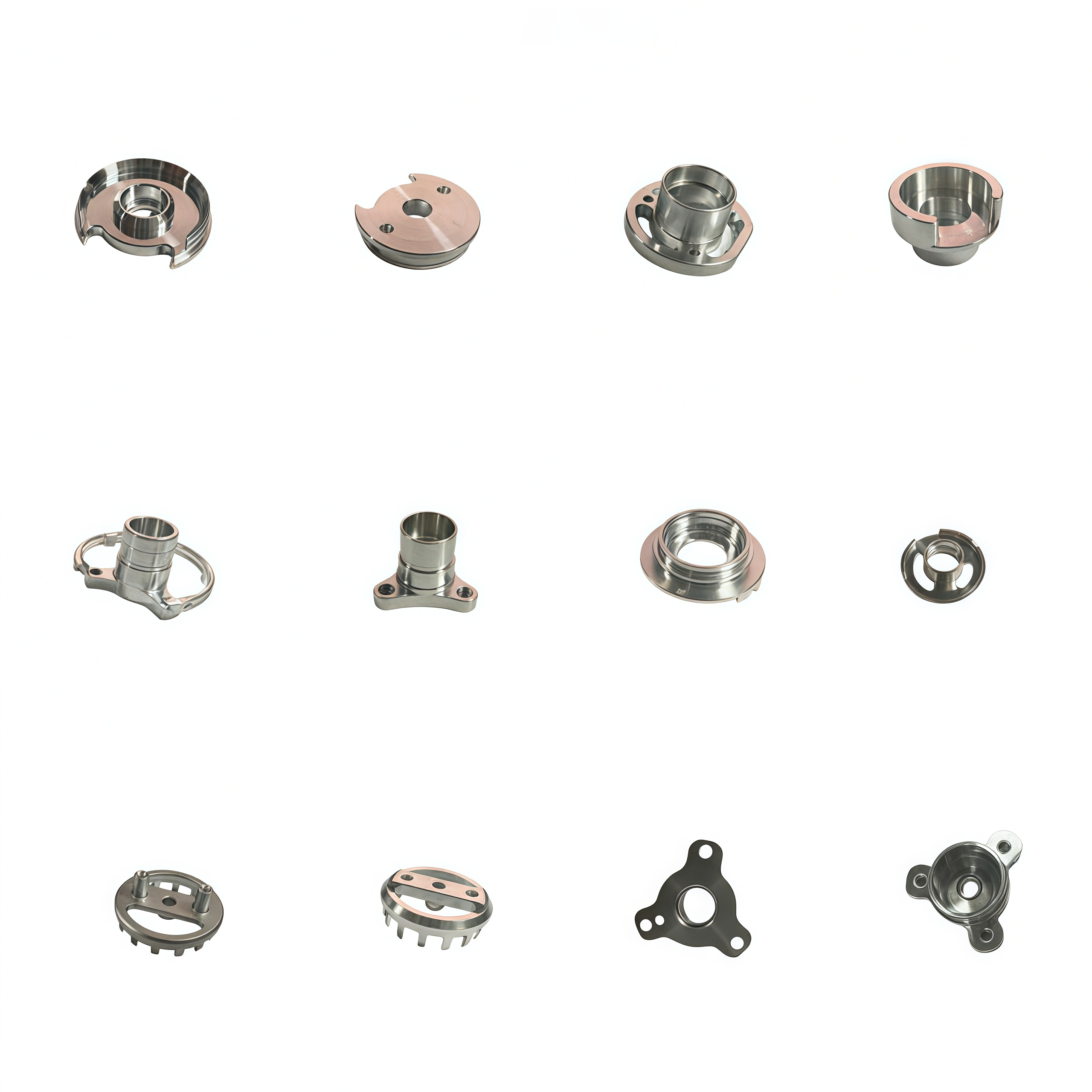
Brushless motors are one of the most important powertrain components in modern unmanned aerial vehicles. From compact FPV drones and camera drones to agricultural UAVs, industrial inspection platforms, mapping drones, and delivery aircraft, reliable motor performance is essential for stable flight, efficient power consumption, and long-term operation.
While the electrical design of a brushless motor is important, the mechanical components inside the motor are equally critical. A rotor bell must maintain accurate concentricity at high rotational speeds. A motor shaft must provide reliable bearing support and stable propeller connection. A magnetic ring must maintain accurate positioning inside the rotor structure. A motor cover must provide precise support for bearings and other internal components.
These components may be small, but their dimensional accuracy can have a significant effect on motor performance.
A difference of only a few microns in a critical diameter, bearing seat, shaft interface, or concentricity requirement can influence rotor balance, vibration, noise, friction, and motor efficiency.
As a professional CNC precision machining manufacturer, we produce customized drone motor components, brushless motor parts, UAV propulsion components, and precision metal hardware for drone manufacturers, motor manufacturers, engineering companies, and OEM brands.
Our manufacturing capabilities include Swiss-type CNC turning, precision CNC machining, multi-axis machining, drilling, tapping, threading, grooving, milling, and customized surface treatment.
We support production based on customer drawings, CAD files, technical specifications, and samples, from prototype development to mass production.
A typical brushless drone motor consists of electrical and mechanical components working together as an integrated system.
Common mechanical components include:
Each component performs a different function within the motor.
The rotor bell provides the rotating structure around the stator. The magnetic ring supports or positions the permanent magnets. The motor shaft transfers rotational force to the propeller system. Bearings and bearing seats maintain smooth rotation. The motor cover and end cap provide structural support and help maintain accurate alignment.
Precision machining is therefore essential for creating a reliable mechanical relationship between all these components.
The rotor bell, also commonly referred to as a rotor cup or motor bell, is one of the most important mechanical components in a brushless drone motor.
It forms the rotating outer structure of the motor and commonly contains permanent magnets around its inner circumference.
During motor operation, the rotor bell rotates at high speed around the stator.
Because of this high-speed rotation, the rotor bell must be manufactured with excellent dimensional consistency.
Important characteristics include:
A poorly balanced rotor bell can contribute to vibration and noise.
For this reason, CNC machining is an excellent manufacturing process for producing custom drone motor rotor bells with repeatable dimensions.
Aluminum alloys are commonly selected for rotor bells because they provide an attractive combination of low weight, strength, and machinability.
Common aluminum grades include:
6061-T6 provides:
It is suitable for many standard and customized drone motor rotor bells.
7075-T6 offers higher mechanical strength and is suitable for applications where strength-to-weight ratio is particularly important.
It can be considered for:
The magnetic ring is another important part of a brushless motor assembly.
Permanent magnets are arranged around the rotor and interact with the electromagnetic field generated by the stator.
The mechanical structure supporting the magnets must maintain consistent positioning.
Depending on the motor design, we can manufacture:
The exact structure depends on the customer’s motor design.
The position of permanent magnets inside a brushless motor has a direct relationship with the motor’s electromagnetic operation.
Inconsistent positioning can contribute to:
Precision CNC machining helps establish accurate mechanical reference surfaces for magnet installation.
For OEM motor manufacturers, maintaining consistent dimensions from one production batch to another is particularly important.
The motor shaft transfers rotational movement from the motor to the propeller or other mechanical components.
It is often exposed to significant rotational and mechanical loads.
Depending on the motor structure, a shaft may include:
The shaft may be manufactured from stainless steel, carbon steel, alloy steel, or another customer-specified material.
A drone motor shaft may require control of:
The bearing interface is especially important.
If the shaft and bearing do not fit correctly, the motor may experience increased vibration, friction, noise, or premature wear.
Our Swiss-type CNC machines are well suited for manufacturing small-diameter motor shafts and other cylindrical precision components.
The motor cover and end cap provide structural support for the motor assembly.
Depending on the design, these components may include:
The bearing seat must be machined accurately because it directly affects the position of the rotating shaft.
A precisely manufactured motor cover helps maintain the correct relationship between:
Rotor → Shaft → Bearing → Stator → Motor Housing
This mechanical alignment is critical for smooth motor operation.
Bearings allow the rotor and shaft to rotate with low friction.
Precision bearing seats and sleeves therefore require careful control of:
Our CNC turning processes can produce small bearing sleeves and cylindrical components with repeatable dimensional accuracy.
Spacers and positioning rings are relatively simple components, but they can play an important role in motor assembly.
They may be used to control:
We can manufacture custom spacers according to exact customer drawings.
Available configurations include:
Material selection depends on the specific component and application.
Important factors include:
Aluminum is one of the most popular materials for UAV motor components.
Common grades include:
Applications include:
The low density of aluminum helps reduce the overall weight of the motor.
Stainless steel is suitable for components requiring higher strength and corrosion resistance.
Common grades include:
Typical applications include:
Carbon steel can be used for shafts, pins, and structural components requiring good mechanical strength and cost efficiency.
Appropriate surface treatment can improve corrosion resistance.
Alloy steel can be considered for applications requiring higher mechanical strength, wear resistance, or fatigue resistance.
Brass is widely appreciated for its excellent machinability.
It can be used for:
The correct surface treatment can improve corrosion resistance, hardness, wear performance, and appearance.
Anodizing is commonly used for aluminum rotor bells, motor covers, and other UAV components.
Benefits include:
Black anodizing is particularly popular for drone motor components.
It provides a professional appearance and is commonly selected for:
Hard anodizing provides a harder surface than standard anodizing and can be considered for components exposed to repeated mechanical contact.
Sandblasting creates a consistent matte texture and is often combined with anodizing.
Polishing can improve surface smoothness and appearance for suitable stainless steel, aluminum, and brass components.
Zinc plating can provide corrosion protection for suitable carbon steel components.
Nickel plating can improve corrosion resistance and surface durability for selected steel and copper alloy components.
Drone motor components often require small dimensions and tight tolerances.
Our manufacturing capabilities include:
| Capability | Specification |
|---|---|
| Precision Tolerance | Up to ±0.005 mm |
| Suitable Turning Diameter | Approximately 2–33 mm |
| Surface Roughness | Ra0.4–Ra1.6 |
| Threading | Metric / UNC / UNF / Custom |
| Production | Prototype to Mass Production |
| Materials | Aluminum / Stainless Steel / Brass / Steel / Copper Alloys |
Actual tolerance capability depends on the component structure, material, geometry, and drawing requirements.
Our factory uses advanced CNC equipment for precision metal component production.
Japanese STAR Swiss-type CNC machines are particularly suitable for small-diameter precision components.
They can manufacture:
Swiss-type machining provides strong support for small workpieces and helps maintain excellent dimensional stability.
Citizen CNC machines support automatic precision turning and efficient production of small and complex metal components.
Tsugami precision CNC equipment is suitable for high-accuracy turning and complex small-component production.
Multi-axis CNC machining can be used for more complicated drone motor components with multiple surfaces and features.
Typical applications include:
Precision motor components require professional inspection.
Our inspection equipment includes:
These tools allow us to inspect critical dimensions and maintain consistent manufacturing quality.
Our quality control process covers multiple stages.
Raw materials are checked according to project specifications.
Initial production samples are measured against approved customer drawings.
Critical dimensions are monitored throughout machining.
Finished products are inspected before packaging and shipment.
Depending on the project, inspection may include:
Different UAV motor manufacturers may use proprietary mechanical designs.
For this reason, we support customized manufacturing rather than limiting customers to standard components.
Customers can provide:
We can manufacture individual components or multiple components for the same motor assembly.
For example, a customer may require a complete set consisting of:
Rotor Bell + Magnetic Ring Holder + Motor Shaft + Motor Cover + Bearing Sleeve + Spacer
We can manufacture each component according to the corresponding drawing and production requirements.
Our precision CNC drone motor components can be used in:
High-speed racing drones require lightweight and accurately manufactured motor components.
Professional camera drones require reliable propulsion components for stable flight.
Agricultural drones often operate outdoors for extended periods, making corrosion resistance and durability important.
Industrial drones may require high-strength components for long-duration operations and heavier payloads.
Mapping UAVs require stable propulsion systems and consistent motor performance.
Inspection drones rely on reliable motors to carry cameras and inspection sensors.
Delivery UAVs require efficient propulsion systems capable of supporting larger payloads.
We specialize in precision CNC machining and can achieve tolerances up to ±0.005 mm for suitable drone motor components.
Our STAR, Citizen, and Tsugami CNC machines provide stable production for small and complex precision components.
We can manufacture rotor bells, magnetic ring holders, motor shafts, covers, bearing sleeves, spacers, bushings, and other custom motor hardware.
We process aluminum, stainless steel, brass, carbon steel, alloy steel, and copper alloys.
We support anodizing, hard anodizing, sandblasting, polishing, zinc plating, nickel plating, and other finishing processes.
CMM, optical measuring systems, CCD inspection, microscopes, thread gauges, and precision measuring tools support our quality control system.
We manufacture according to customer drawings, CAD files, samples, and technical requirements.
Whether you need prototype samples, small-batch production, or high-volume orders, we can provide flexible manufacturing solutions.
Our ISO 9001 quality management system supports controlled production, inspection, documentation, and continuous improvement.
IATF 16949 is an internationally recognized automotive quality management standard that emphasizes process control, risk management, traceability, and consistent product quality.
Our quality management systems support our commitment to stable and reliable precision manufacturing.
The mechanical components inside a brushless drone motor may be small, but they have a major influence on motor performance.
A precision-machined rotor bell helps maintain stable rotation. A properly manufactured magnetic ring structure supports consistent magnet positioning. A high-accuracy motor shaft ensures reliable bearing and propeller alignment. A precision motor cover maintains the position of critical internal components.
Together, these components create the mechanical foundation of a reliable UAV propulsion system.
With advanced STAR, Citizen, and Tsugami CNC equipment, multi-axis machining capabilities, professional inspection systems, multiple material options, and comprehensive surface treatment services, we provide customized CNC drone motor components for UAV manufacturers and motor brands.
From individual rotor bells, magnetic rings, motor shafts, and motor covers to complete sets of custom brushless motor components, we support customers from prototype development to mass production.
Our focus is not simply to manufacture individual metal parts, but to provide consistent, accurate, and reliable components that help drone manufacturers improve the performance and durability of their next-generation UAV motors.
If you are interested in this exceptional product, please feel free to contact us through the message box on the left side or the contact information provided below. We are eager to collaborate with you for a brighter future!