
In today’s rapidly evolving digital era, electronic communication technology has become one of the core driving forces behind industrial automation, smart devices, cloud computing, AI systems, semiconductor equipment, IoT infrastructure, 5G networks, satellite communication, optical transmission systems, and high-speed data centers. As communication systems become more compact, faster, and more intelligent, the demand for precision electronic communication hardware components continues to grow significantly.
Modern telecom and electronic systems require extremely accurate mechanical components to ensure stable signal transmission, precise electrical conductivity, thermal management efficiency, structural stability, and long-term operational reliability. Tiny deviations in size, thread precision, or surface smoothness may directly affect signal integrity, connector stability, heat dissipation, and assembly performance.
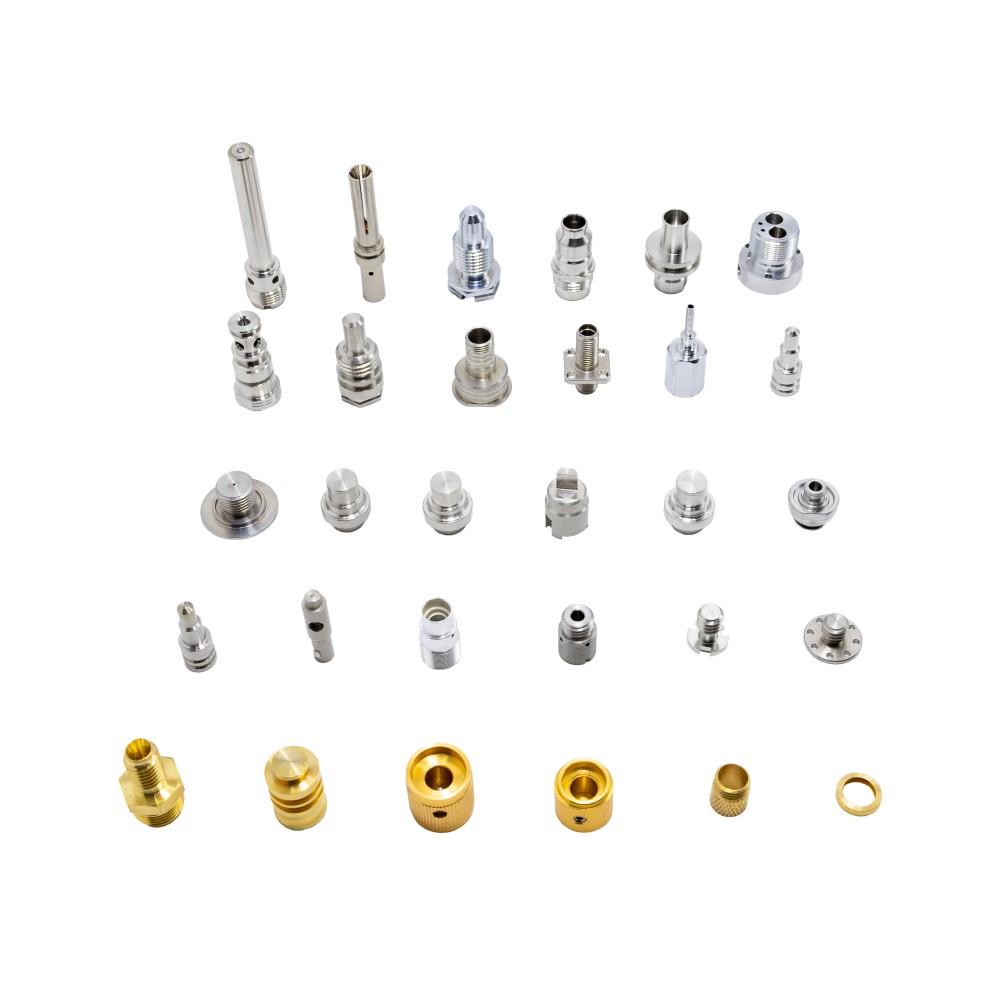
The precision components shown in the reference image represent typical CNC machined electronic communication hardware products manufactured using advanced Swiss-type CNC turning, precision milling, drilling, tapping, polishing, anodizing, electroplating, and micro-machining technologies. These miniature metal components feature ultra-high dimensional accuracy, smooth surface finishes, stable concentricity, fine threading structures, and excellent conductivity performance.
As a professional precision metal parts manufacturer, we specialize in producing high-performance electronic communication hardware components for global telecom, industrial automation, semiconductor, and high-frequency communication industries. Our products are widely used in RF systems, signal transmission modules, communication connectors, optical devices, data center systems, semiconductor equipment, industrial control systems, precision electronic instruments, and advanced smart manufacturing equipment.
Many people focus on chips, software systems, or communication protocols when discussing electronic communication technology. However, precision metal hardware components are equally important because they provide the physical foundation for stable signal transmission and equipment operation.
Low-quality communication hardware may cause:
Precision CNC machined communication components improve:
As 5G, AI, and IoT technologies continue advancing, ultra-precision communication hardware manufacturing has become increasingly important.
We manufacture a wide range of electronic communication hardware components suitable for different industries and technical applications.
RF connector systems are widely used in:
Features include:
RF connectors require micron-level machining accuracy to ensure signal stability.
Conductive pins are essential components in electronic transmission systems.
Products include:
These miniature structures require extremely high machining precision and excellent surface quality.
Housing structures protect sensitive communication modules and internal systems.
Applications include:
Features include:
The image contains many miniature shaft and sleeve components commonly used in:
Miniature precision parts require ultra-stable machining capability and advanced inspection systems.
Modern communication systems generate significant heat during operation.
Our thermal management products include:
These products improve communication system stability and lifespan.
We support OEM and ODM customization services according to customer drawings, samples, or technical requirements.
Custom products include:
Material engineering plays a critical role in electronic communication hardware manufacturing.
Proper material selection directly affects:
Brass is one of the most widely used materials in precision communication hardware.
Advantages include:
Applications include:
The gold-colored components shown in the image are typical brass communication parts.
Copper offers superior conductivity and thermal performance.
Benefits include:
Applications include:
Stainless steel is widely used in communication hardware requiring strong structural stability.
Advantages include:
Applications include:
Aluminum alloys are increasingly popular in lightweight communication equipment.
Advantages include:
Applications include:
Features include:
Advantages include:
Used in high-end communication systems.
Titanium is used in premium communication systems because of its:
Applications include:
Surface treatment is essential for improving conductivity, corrosion resistance, appearance, and wear resistance.
Gold plating is one of the most important surface treatments in communication hardware.
Advantages include:
Applications include:
Gold-plated components are widely used in high-end communication systems.
Nickel plating improves:
Nickel-plated parts are commonly used in industrial communication equipment.
Silver plating provides:
Applications include:
Anodizing is commonly used for aluminum communication structures.
Advantages include:
Popular colors include:
Polishing improves:
Mirror polishing is commonly applied to visible communication hardware.
Sandblasting creates a consistent matte texture and improves coating adhesion.
Benefits include:
Laser marking supports:
Electronic communication systems require extremely precise hardware manufacturing standards.
| Component Type | Standard Tolerance | Ultra Precision Tolerance |
|---|---|---|
| RF Connector Pins | ±0.02 mm | ±0.003 mm |
| Conductive Terminals | ±0.02 mm | ±0.005 mm |
| Miniature Shafts | ±0.03 mm | ±0.005 mm |
| Precision Sleeves | ±0.03 mm | ±0.005 mm |
| Optical Components | ±0.01 mm | ±0.002 mm |
Ultra-precision machining ensures:
Poorly machined connectors may affect transmission quality.
Adopt ultra-precision CNC machining and high-conductivity surface treatments.
Electronic hardware may oxidize in humid or industrial environments.
Apply gold plating, nickel plating, or anodizing technologies.
Modern devices demand smaller and more complex hardware.
Use Swiss-type CNC machining and micro-machining technologies.
Communication devices generate large amounts of heat.
Use aluminum and copper materials combined with optimized thermal management structures.
Our factory utilizes advanced production systems specifically designed for precision communication hardware manufacturing.
Ideal for:
These machines provide ultra-high dimensional consistency.
Used for:
Suitable for:
Ensure:
Supporting:
Inspection systems include:
Each communication component undergoes strict quality inspection procedures including:
This ensures stable product quality and long-term reliability.
To meet global communication industry standards, our manufacturing systems comply with:
These certifications guarantee environmental compliance, manufacturing consistency, and reliable product quality.
Our products are widely used in:
High-frequency RF hardware for advanced signal transmission systems.
Precision structural components for optical modules and fiber transmission equipment.
Ultra-precision conductive hardware for semiconductor manufacturing systems.
Cooling and communication hardware for server systems and cloud computing equipment.
Precision communication connectors for intelligent manufacturing systems.
High-performance communication hardware requiring aerospace-grade reliability.
The future of communication hardware manufacturing is moving toward:
Precision communication hardware manufacturers will continue supporting the development of next-generation digital infrastructure.
If you are interested in this exceptional product, please feel free to contact us through the message box on the left side or the contact information provided below. We are eager to collaborate with you for a brighter future!