
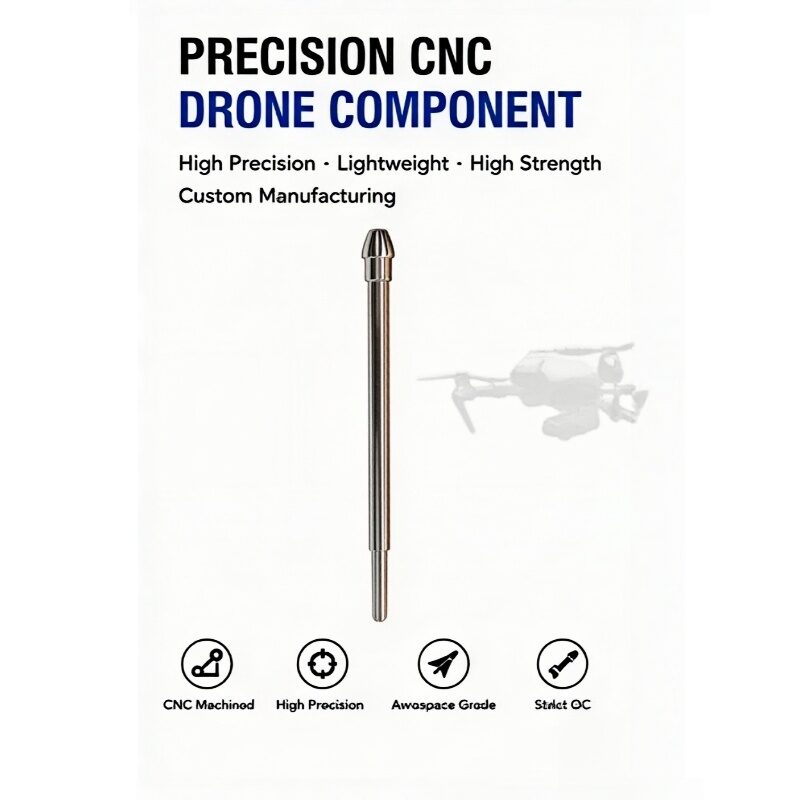
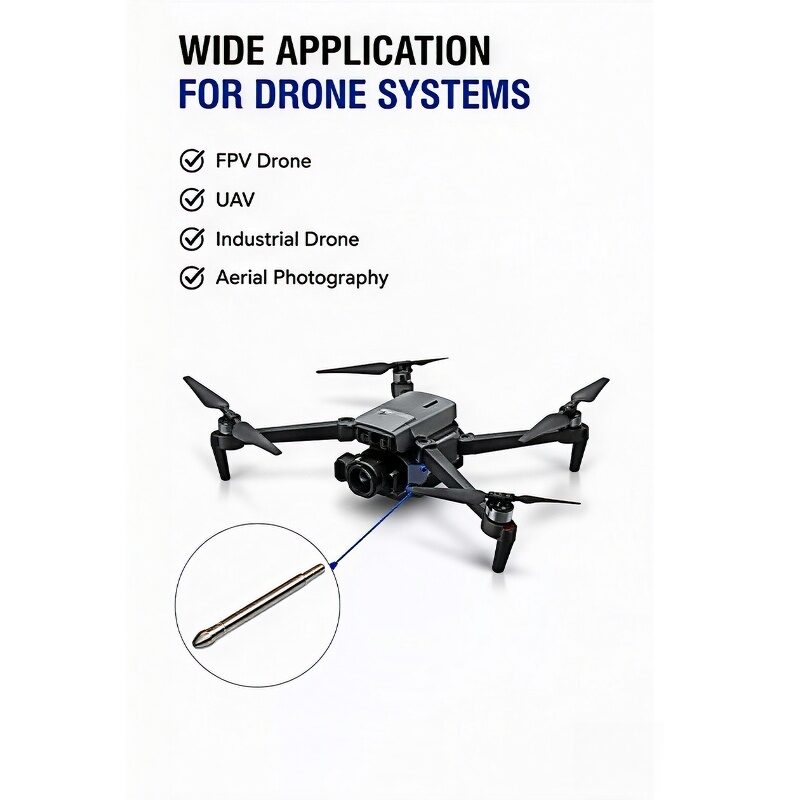
As the drone industry rapidly evolves, pilots and manufacturers demand ever higher precision, strength, and lightweight construction from every component. Whether used in agricultural spraying, industrial inspection, FPV racing, or logistics, the quality of every bracket, mount, or connector directly impacts flight time, stability, and durability.
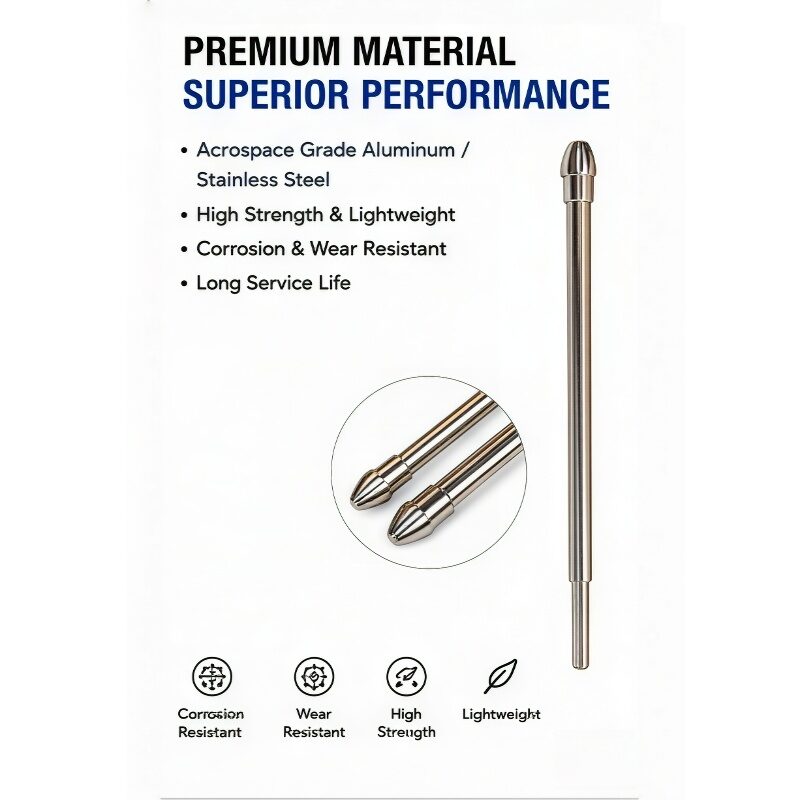
Precision CNC machining combined with aerospace-grade materials (such as 7075-T6 aluminum, 303/304/316 stainless steel) and professional surface finishing (anodizing, polishing, sandblasting) has become the gold standard for high-performance UAVs. This article explores how these technologies deliver real-world value and helps you select the best CNC component solution for your drone platform.
Exceptional strength-to-weight ratio: Tensile strength up to 570 MPa, density only 2.81 g/cm³.
Nearly twice as strong as common 6061 aluminum at almost the same weight.
Best for: FPV racers, aerial photography drones, survey UAVs – any platform where weight savings are critical.
Typical parts: Motor mounts, arm connectors, gimbal vibration plates, quick-release clamps.
Excellent corrosion and wear resistance – Type 316 withstands pesticides, salt spray, acids, and alkaline environments.
Higher strength and rigidity than aluminum, ideal for high-impact or continuous vibration areas.
Best for: Agricultural spraying drones (booms, nozzle holders), logistics drone mounting points, landing gear reinforcements.
Typical parts: Tank brackets, battery rail guides, cargo hooks, pivot pins.
💡 Hybrid recommendation: Use 7075-T6 for primary structural parts to save weight, and stainless steel for localized high‑stress or corrosion‑prone areas – achieving the best balance of performance and weight.
| Finish | Key Benefits | Recommended Material | Drone Applications |
|---|---|---|---|
| Anodizing | Increases surface hardness (HRC 50–60), corrosion resistance, available in black/red/blue colors | 7075-T6 | Gimbal frames, visible covers, FPV side plates (scratch resistant) |
| Polishing | Mirror finish, reduces air drag, easy to clean | Stainless steel, 7075 | Racing drone shells (drag reduction), display parts |
| Sandblasting | Uniform matte surface, fingerprint‑resistant, improves coating adhesion | Stainless steel, aluminum | Industrial inspection parts, components exposed long‑term outdoors |
Hard anodizing (a subtype of anodizing) further improves wear resistance – ideal for frequently inserted or sliding parts like battery rails.
Sandblasted stainless steel reduces glare, avoiding interference near optical or infrared sensors.
Key challenges: Corrosion from pesticides, high vibration, dust in the field.
Recommended material: 316 stainless steel + sandblasting (or hard‑anodized 7075-T6).
Critical parts: Nozzle holders, fluid filter adapters, arm vibration isolators.
CNC advantage: Precision flow channels optimize atomization and reduce clogging.
Key challenges: Long endurance weight, precise mounting of electronics.
Recommended material: 7075-T6 aluminum + anodizing (black/grey).
Critical parts: RTK antenna brackets, LiDAR mounting plates, quick‑release camera mounts.
CNC advantage: ±0.005 mm tolerances ensure perfect sensor alignment.
Key challenges: Extreme weight reduction, aerodynamics, impact toughness.
Recommended material: 7075-T6 (polished or thin‑film anodized).
Critical parts: Motor bases, camera mounting brackets, battery straps/plates.
CNC advantage: Complex cut‑out and hollow structures possible – more durable than carbon fiber plates without adding weight.
Key challenges: Heavy load impact, repeated assembly/disassembly, wear.
Recommended material: 304 stainless steel (high‑stress points) + 7075-T6 (secondary structures).
Critical parts: Cargo hooks, landing gear joints, motor heat‑sink bases.
CNC advantage: One‑piece machining reduces welded joints, improving structural integrity.
During flight, drones experience constant vibration and aerodynamic loads. Even a 0.1 mm mounting error can cause:
Motor axis misalignment → lower efficiency, increased heat.
Gimbal level error → shaky video, failed stabilization algorithms.
Excessive folding joint play → arm wobble, loss of control.
Precision CNC machining holds critical mating surfaces to ±0.005 mm – ±0.01 mm, ensuring:
Screw holes align perfectly – no reaming or shims needed.
Balanced components (e.g., motor mounts) require less secondary calibration.
Foldable structure lifespan increases by 3x or more.
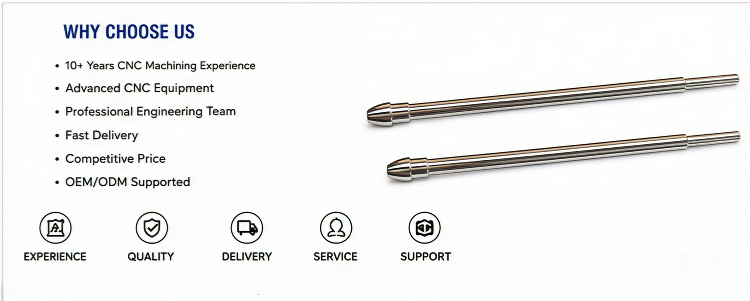
We support custom parts from your drawings (STEP, IGES, DWG formats), from single prototypes to production batches.
| Service Parameter | Range |
|---|---|
| Max. machining size | 500 × 400 × 300 mm |
| Typical precision | ±0.01 mm (±0.005 mm achievable) |
| Minimum order quantity | 10 units (samples from 1 unit) |
| Prototyping lead time | 5–7 business days |
| Production lead time | 15–25 business days |
We also recommend the optimal material + finish combination based on your operating environment (coastal high salt spray, desert dust, high humidity, etc.).
Q1: How much heavier are 7075-T6 aluminum parts compared to carbon fiber?
A: For the same volume, 7075-T6 density is about 1.5× that of carbon fiber. However, CNC aluminum can be machined into thinner, more complex ribbed structures. The actual added weight to the whole drone is typically 10–20%, while impact resistance is far superior to carbon fiber.
Q2: Won’t stainless steel parts be too heavy?
A: Stainless steel is usually used for small, localized high‑load parts (e.g., cargo hooks, pivot pins). Each part typically weighs between 5–20 grams – negligible impact on total drone weight.
Q3: Will the anodized layer peel off?
A: No. Anodizing converts the aluminum surface into an integral oxide layer – it does not peel like paint. Hard anodizing is extremely hard and scratch‑resistant.
Q4: Can you machine titanium alloy as well?
A: Yes. Titanium alloys (e.g., Grade 5) can also be machined on request, ideal for military or subsea drone components with extreme strength/corrosion requirements. Please contact us for custom orders.
Q5: How do I order custom parts?
A: Please provide 3D drawings (STEP format preferred) and your technical requirements. We will reply with a DFM evaluation and quote within 24 hours.
Whether you are an individual FPV pilot, a drone startup, or a large agricultural/logistics operator, choosing the right precision CNC drone components significantly improves your UAV’s reliability, flight time, and maintenance convenience. From the lightweight advantage of 7075-T6 aluminum to the durability of stainless steel, and the protective value of anodizing, polishing, and sandblasting – every detail matters.
For samples or technical inquiries, please contact our engineering team.
If you are interested in this exceptional product, please feel free to contact us through the message box on the left side or the contact information provided below. We are eager to collaborate with you for a brighter future!